%20(1)-B86R08ZzwhPzS6UZbG3mSxRWPCwGwn.png)


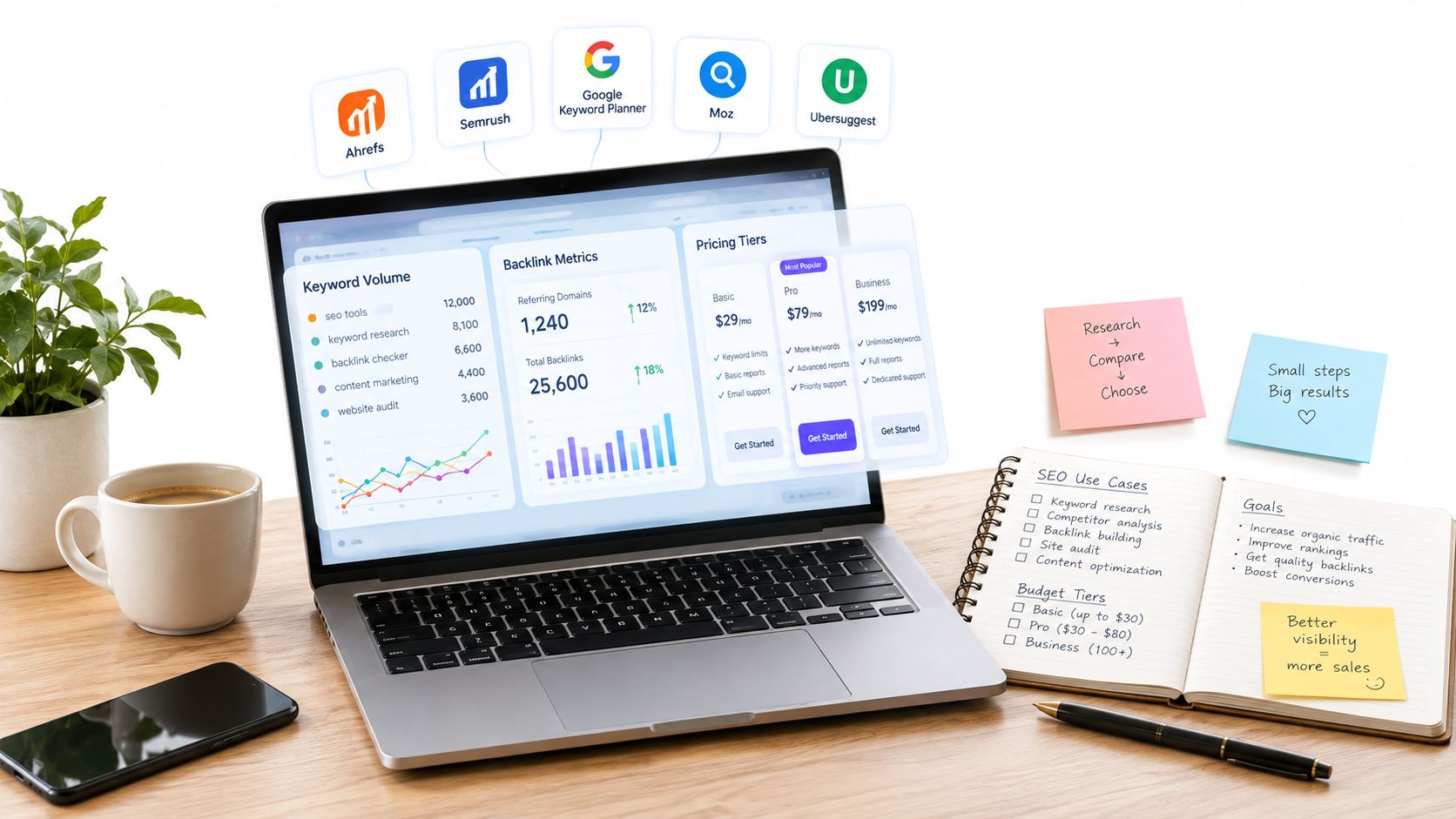
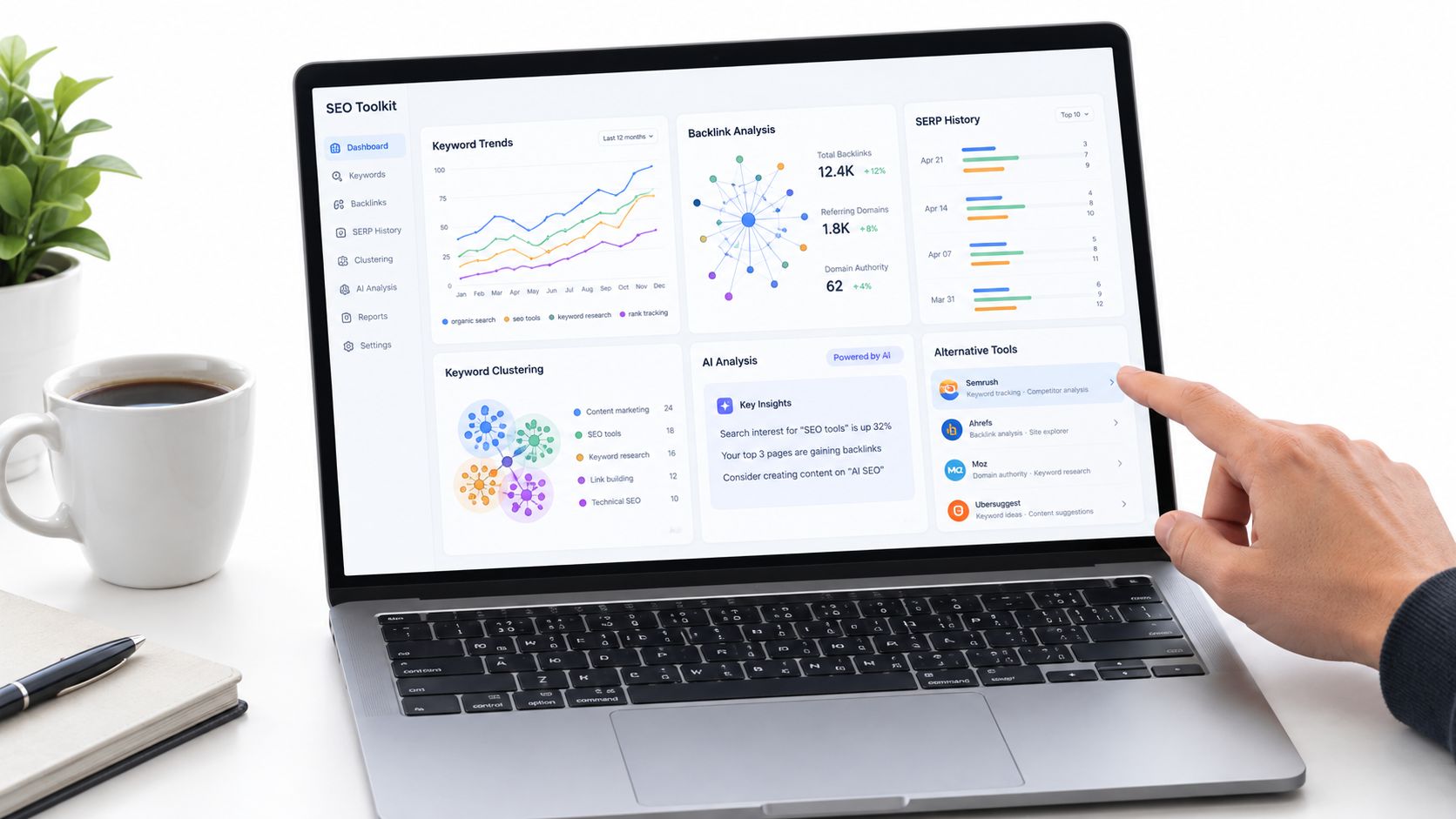
Teams comparing Ubersuggest alternatives start with price. That's the mistake. I'd start with the workflow you run every week, such as competitor gap pulls, backlink prospecting, and SERP checks, then find the tool that keeps that loop intact at a budget you can defend.
A cheaper subscription can cost more if it forces you to export data from one tool, inspect ranking pages in another, validate SERPs somewhere else, and assemble the findings manually. A premium suite can also be wasteful if your real job is finding long-tail topics for a small content calendar.
The shortlist below is organized around those trade-offs. I'm judging each platform by what happens after you leave Ubersuggest, especially whether competitor keywords remain mapped to the right URLs, whether backlink data supports real outreach, whether SERP history is usable, and whether AI-search visibility is measured separately from ordinary rankings.
Spis treści
- 1. SemDash
- 2. SE Ranking
- 3. Serpstat
- 4. Moz Pro
- 5. SpyFu
- 6. Keyword Tool
- 7. Semrush
- 8. Ahrefs
- 9. SISTRIX
- 10. Similarweb
- Top 10 Ubersuggest Alternatives, Feature Comparison
- Choosing Your Ubersuggest Replacement Without Regret
1. SemDash
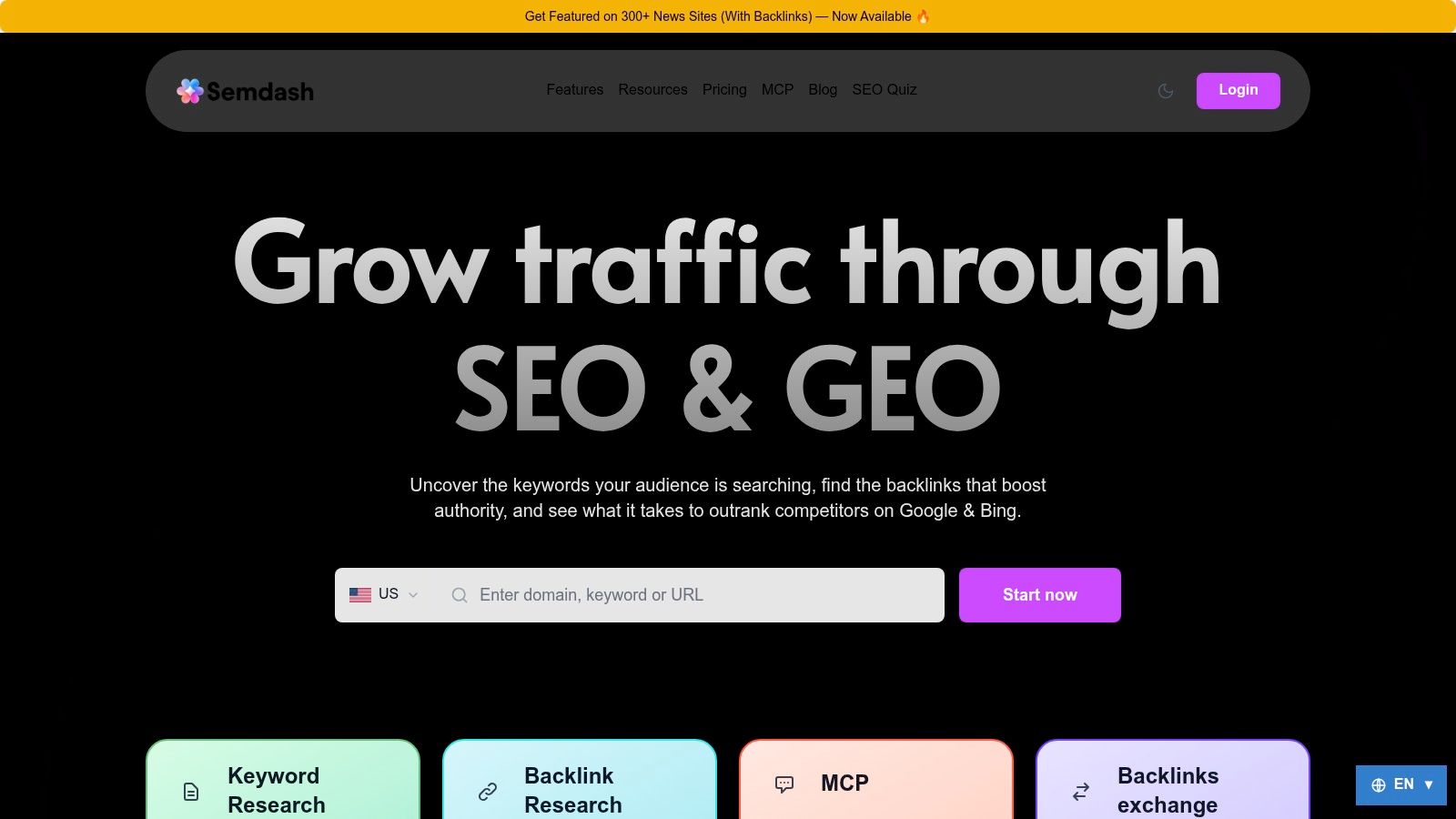
SemDash is the strongest replacement when I want Ubersuggest-style discovery without splitting competitor research, backlinks, SERPs, and content planning across separate workspaces. Its database includes 6,6 miliarda słów kluczowych Google zaktualizowanych w ciągu ostatnich 30 dni, a 2.7 trillion-link backlink index, a 600 milionów SERPów odświeżanych miesięcznie, according to the product information supplied for this comparison. Those figures describe scale and freshness, not guaranteed coverage for every niche, so I'd still validate a few important domains during the free trial.
The workflow is straightforward. I can open Domain Keywords, compare competitors in Keyword Gap, inspect Traffic Share and Top Pages, then follow each opportunity to the exact ranking URL. That page-level mapping is what often breaks after leaving a lightweight tool. A keyword list without the page that ranks for it doesn't tell me whether to update an existing article, create a new page, or study a competitor's template.
Where SemDash saves time
SemDash's backlink workflow goes beyond a referring-domain total. Backlink Gap, anchor context, unlinked brand mentions, and broken-link recovery help me turn discovery into a prospect list. I still inspect the linking page, destination URL, indexability, and relevance before outreach. Google's guidance distinguishes useful discovery links from link spam and manipulative practices, so raw index size never substitutes for manual qualification. Google's search guidance is the right reference for that distinction.
The content workflow is equally practical. People Also Ask, People Also Search, long-tail suggestions, intent classification, clustering, and AI-assisted briefs help me group terms by page rather than publish several articles that compete with one another. SemDash also tracks AI Overviews, including the keywords that trigger them and the exact cited URLs. That matters because traditional rankings and AI citations can diverge. A study of 1.9 million citations from 1 million Google AI Overviews wykazała, że 76.1% of cited pages ranked in the traditional top 10, while 14.4% ranked below position 100 or weren't visible in the measured results. The cited-URL analysis supports treating citation monitoring as its own dataset.
Praktyczna zasada: Use SemDash to find opportunities, then sample exports in your own markets. Some users report less keyword extraction depth in edge cases than Ahrefs, and current enterprise-style bulk multi-domain workflows need testing.
SemDash offers a free trial, SEO Academy videos, product updates, a public roadmap, YouTube resources, and free live support calls. It's a strong fit for consultants, agencies, e-commerce teams, and small businesses that want fast reverse-engineering in one interface. I'd be cautious only if exhaustive single-domain extraction or large bulk analytics is essential.
2. SE Ranking
SE Ranking is a practical replacement once Ubersuggest stops covering client reporting, rank monitoring, and multi-project work, while Semrush or Ahrefs would add more database depth than the budget requires. It fits freelancers and small agencies that need keyword research, competitor analysis, backlink monitoring, site audits, local SEO, rank tracking, and reporting in one subscription.
The workflow change is repeatable rank monitoring. Daily rankings and Share of Voice show whether a client's visibility is improving, how tracked competitors are moving, and where a report needs explanation. Ubersuggest can identify target terms, but SE Ranking adds scheduled reporting and Looker Studio connectivity for teams that deliver results through a client-facing dashboard.
What the subscription replaces
Before buying, test three workflows on a live project: export a competitor's ranking terms, inspect the pages ranking for those terms, and produce a report a client can understand without a walkthrough. SE Ranking also covers backlink checking and monitoring, on-page analysis, SERP analysis, and site auditing. Its 14-dniowego darmowego okresu próbnego is long enough to compare those tasks with your current process. SE Ranking's platform information explains the product and trial availability.
The limitation is database scale. Coverage suits freelancers and SMBs, but teams seeking the largest keyword or backlink index may find it narrower than the biggest incumbents. API credits can also become a constraint when automated reporting or internal dashboards drive delivery, with the API or Agency Pack adding to the total cost.
I'd choose SE Ranking for coverage per subscription. It keeps competitor gap pulls, rank history, audits, and client reporting in one workflow, while leaving exhaustive market intelligence to larger platforms. Check the included limits against your project count and reporting cadence before committing.
3. Serpstat
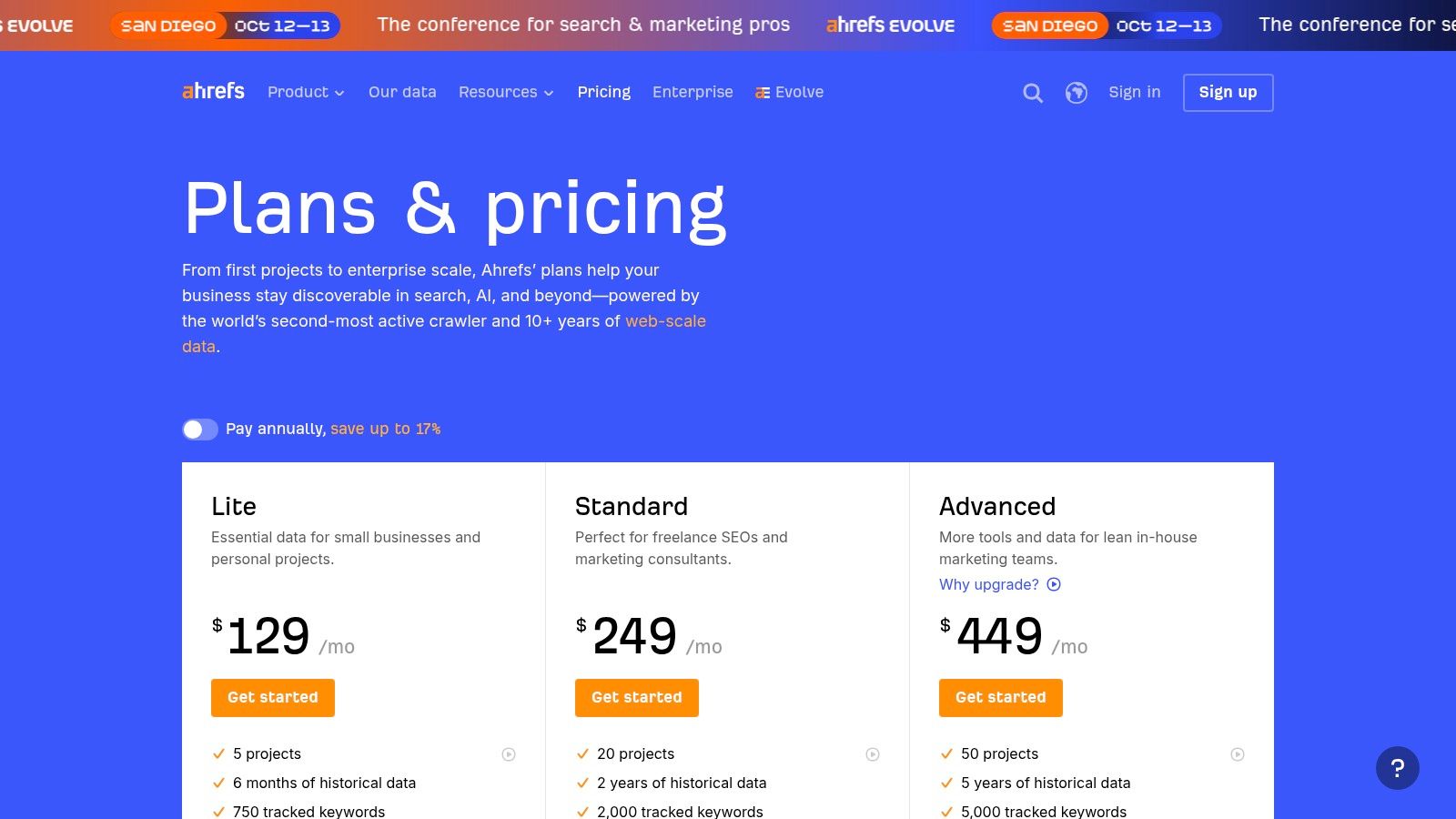
Serpstat works well when I need an all-in-one platform with keyword research, domain analysis, rank tracking, audits, backlinks, clustering, and automation options, but I'm still controlling spend. It's a more operational replacement for Ubersuggest, particularly for teams that need scheduled reports, long-term data retention, and API access.
I'd begin with a competitor domain report, export ranking terms, and group them by intent or page type. Then I'd compare those findings with the Rank Tracker and inspect whether SERP changes explain a visibility shift. Serpstat's Rank Tracker includes AI Overviews keyword tracking, which is useful for question-led content and conversational queries. A separate 55,393-query study reported that AI Overviews appeared for 13.7% of all searches, with nearly 65% of question-form searches triggering one. The study summary makes question-led monitoring a practical test rather than a speculative add-on.
Where the trade-off appears
Higher tiers add scheduled reports, JavaScript rendering in Site Audit, API credits from the Team tier upward, custom datasets, and credit-based automation. Those capabilities matter if I'm feeding data into internal dashboards or generating recurring client deliverables. The platform also offers multi-year discounts, which can improve the economics for a stable team, though monthly pricing is mainly presented through annual equivalents and pay-as-you-go options are less visible.
Serpstat's UI can feel dense at first. That isn't a deal-breaker, but it means onboarding takes more deliberate setup than a lightweight keyword tool. I'd document saved reports, naming conventions, and export filters before handing it to a wider team.
The 7-dniowa wersja próbna is enough for a focused coverage test. I'd compare the same competitor across Serpstat and the incumbent I'm replacing, then check whether the export contains useful ranking URLs rather than only a large list of terms.
4. Moz Pro
Moz Pro remains a good choice when the people using the tool need clarity more than maximum database depth. Keyword Explorer, campaign-based rank tracking, Site Crawl, prioritized technical issues, and link analysis cover the core SEO loop without making a new practitioner learn an overly complicated interface.
I'd use Moz Pro for a small in-house team that needs to create a keyword set, monitor a defined group of sites, and turn crawl findings into a prioritized task list. The educational ecosystem also matters. When a tool is used by marketers who don't live in SEO every day, understandable terminology and training resources reduce the cost of adoption.
A sensible fit for reporting teams
Moz's campaign model works best when the project scope is stable. I can define tracked sites, keywords, crawl settings, and reporting expectations, then keep the same measurement framework over time. Higher tiers include AI Overviews by keyword and AI content briefs, which add relevance for teams that want to connect conventional rank tracking with generative search visibility.
That distinction is necessary. Google says AI Overviews can use query fan-out, issuing related searches across subtopics and data sources before forming a response. Google also says that links shown in AI Overviews are included in overall Search performance reporting, while its generative-AI reporting defines an impression as a time a site link appears in an AI feature. Google's AI Overviews documentation explains why I'd want feature-level visibility rather than a single blended ranking number.
Moz's limits are easier to understand than hidden constraints, but the entry plan can become tight for agencies. Advanced datasets also trail the largest incumbents. I'd choose it for accessibility, reporting, and education, not for the deepest possible competitor extraction or the widest link index.
5. SpyFu
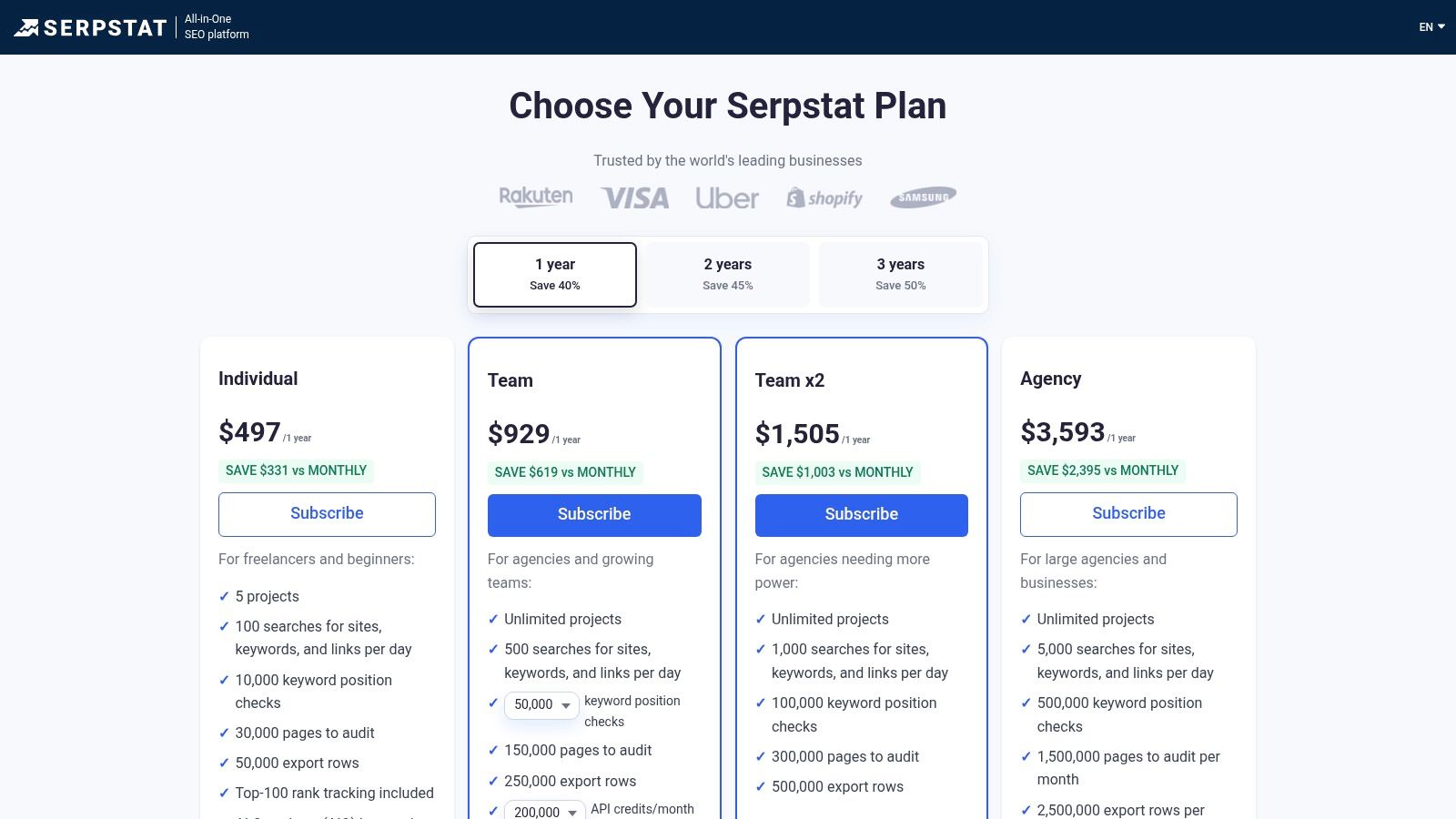
SpyFu is the fastest option here for competitive reconnaissance across SEO and Google Ads. I use it when the question is narrow and commercial: which competitors rank for this group of terms, what ads have they run, which landing pages keep appearing, and how has that visibility changed historically?
The platform combines domain and keyword history, PPC research, ad-copy archives, paid-search insights, and historical SERPs. Paid plans support unlimited searches, while API access is available on Pro+ AI and Team or Agency plans, with pay-as-you-go API pricing per row. I'd verify the API cost against the number of rows my reporting process needs before assuming the subscription covers automation.
Best for fast competitive answers
SpyFu's interface is task-oriented. That's useful when I'm doing reconnaissance before a strategy workshop, but it's narrower than a full SEO suite. It won't replace a deep site audit, a broad content planning system, or a backlink qualification workflow.
International coverage is another limitation. The data is strongest for the U.S. market and less granular internationally, so I wouldn't make it the default platform for a multilingual business without checking the target countries directly.
For a competitor gap pull, SpyFu is efficient. For a complete weekly operating system, I'd pair it with a crawler, first-party analytics, and a backlink tool, which can erase the apparent budget advantage. Teams specifically comparing this workflow can also review SpyFu alternatives from SemDash.
6. Keyword Tool
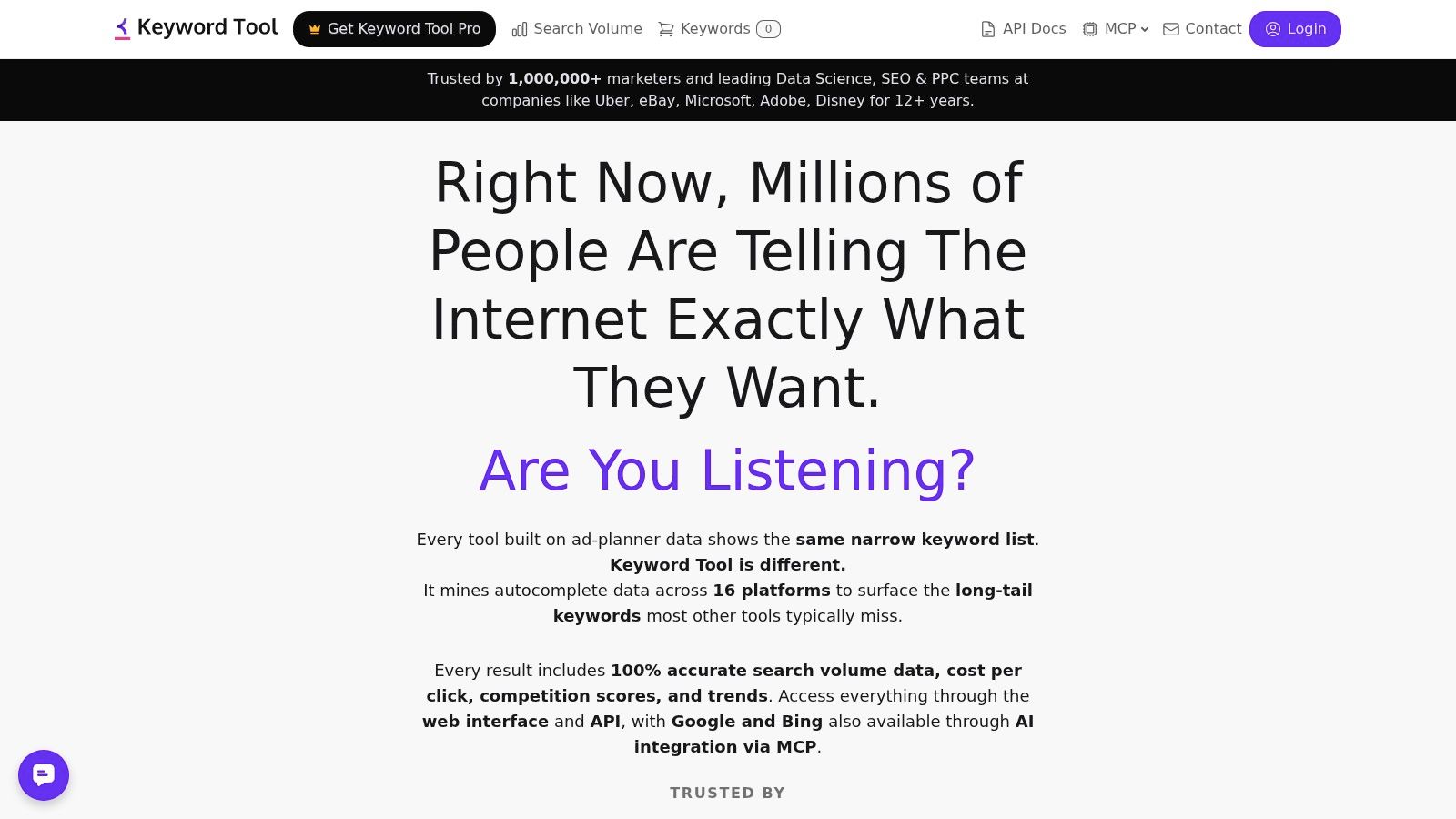
Keyword Tool, also known as KeywordTool.io Pro, is the lightweight option for expanding a topic quickly from autocomplete data. It pulls long-tail ideas across Google, YouTube, Amazon, and other platforms, which makes it useful when the content brief needs language from more than standard web search.
I'd use it at the start of a research session. Enter a seed phrase, collect variations, separate questions from product modifiers, and move the result into a clustering or validation workflow. It's faster to learn than a full SEO suite because it doesn't ask me to configure projects, competitors, crawls, and campaigns before producing ideas.
What it doesn't replace
The free version hides core metrics. Pro plans add search volume, CPC, competition, trend data, and API access, but the tool still isn't a backlink or site-audit replacement. Its research-point model can support keyword ideation, yet it doesn't preserve the full competitor-to-ranking-page workflow that I'd expect from a serious Ubersuggest replacement.
That limitation is often acceptable. If a copywriter needs related queries for a product category or a video team needs YouTube phrasing, paying for a broad SEO suite would add complexity without solving the immediate problem. If I need to decide which competitor page to replicate, whether a topic is already covered by my site, or which links support a page, I'd move the output into another platform.
7. Semrush
Semrush makes sense after Ubersuggest when one workflow spans SEO, PPC, content, technical audits, competitor research, reporting, and AI visibility. That breadth comes with more setup and a higher operating cost. I'd choose it only when the team will use several modules every week.
Its strongest fit is a multi-channel agency or in-house marketing department. The platform supports competitor keyword-gap research, daily position tracking, Share of Voice, technical audits, content optimization, historical checks, market research, and AI prompt monitoring. That can replace several point tools, but only if the team has clear owners and repeatable workflows. For a small site seeking occasional keyword ideas, the extra workspace adds little.
Where the budget expands
The subscription is more expensive than lightweight alternatives, while seats, projects, tracked keywords, exports, historical data, API access, and AI visibility can raise the total. Model those requirements before comparing the plan with Ubersuggest. More features do not lower costs when the team leaves major modules unused.
Semrush is particularly useful for market-level research. Its competitor and market tools connect ranking keywords with organic and paid visibility, helping analysts assess acquisition channels rather than collect isolated low-competition terms. That broader view is useful for campaign planning, but it does not automatically improve the quality of the underlying decisions.
AI visibility needs its own evaluation. One analysis found that 9.5% of cited pages ranked between positions 11 and 100, while 14.4% ranked below position 100 or were absent from measured traditional results. The AI citation research shows why conventional rank tracking can miss answer-surface exposure. SemDash offers a narrower comparison in a Semrush alternatives analysis, though it trails Semrush on the breadth of modules and market data.
8. Ahrefs
Ahrefs is the specialist pick when backlink research and deep competitor analysis drive the weekly workflow. Site Explorer, Keywords Explorer, Rank Tracker, Site Audit, SERP history, and content tools give me the ability to move from a competitor's page to the terms it ranks for, the links supporting it, and the historical context around its performance.
For link acquisition, I don't treat a large referring-domain count as proof of value. I inspect the linking page, surrounding text, destination URL, indexability, and relevance. A domain can create thousands of sitewide links, point links at deleted pages, or sit outside the target market. The useful workflow is filtering referring domains, anchors, linked pages, new links, and lost links, then manually sampling prospects before outreach.
The cost of depth
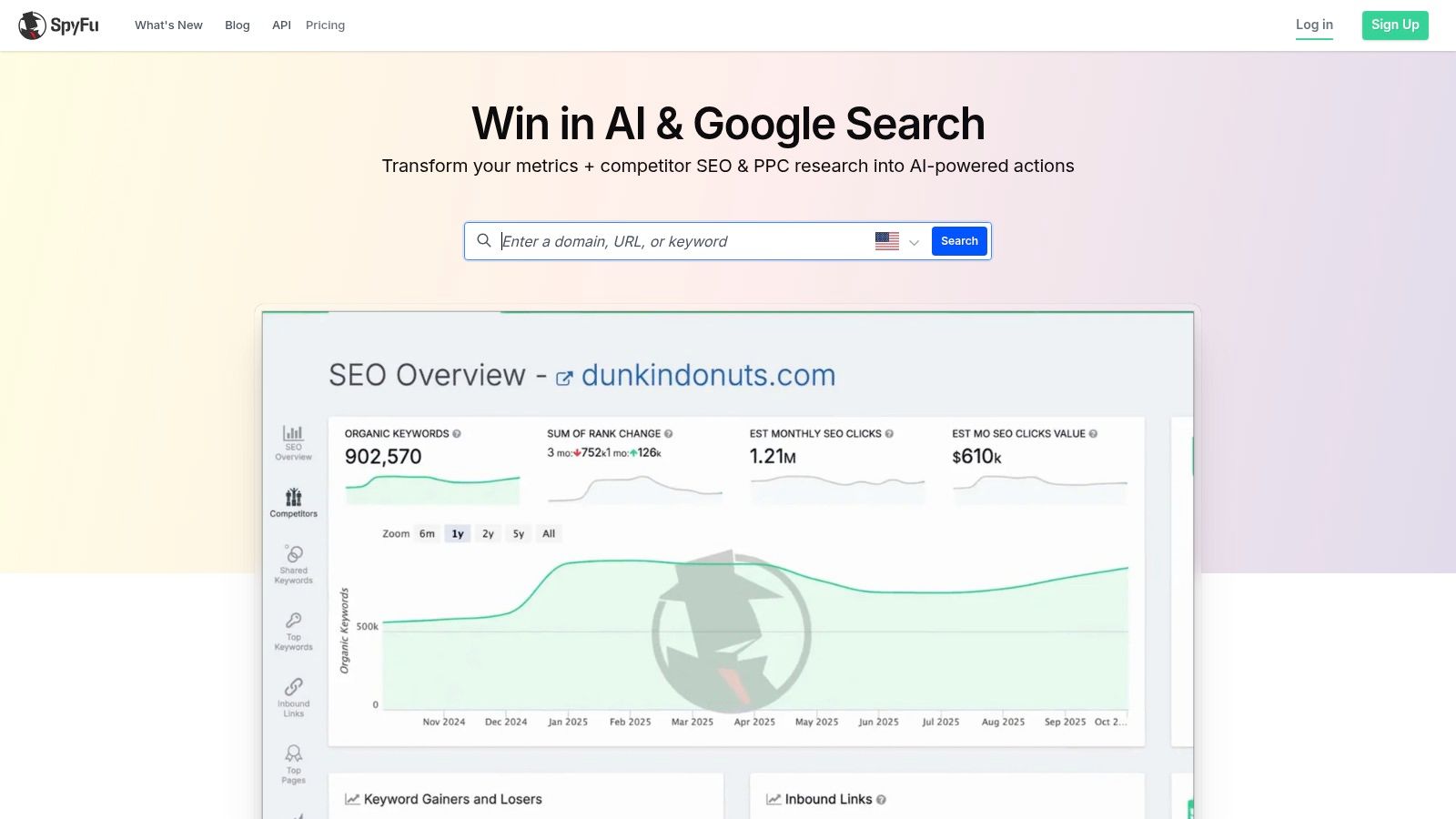
Ahrefs is powerful, but power users may need higher tiers for exports, rows, and enterprise access. A lower-cost Starter option supports basic needs, while larger API access is available at Enterprise level. That makes the buying decision less about whether Ahrefs has the data and more about how much of that data the team needs to extract and operationalize.
I'd choose Ahrefs when a link index and historical competitor analysis justify the spend. I wouldn't buy it solely for occasional keyword discovery. Search Console is still essential for first-party performance, and Google's documentation organizes performance around impressions, clicks, queries, pages, and dates, with views that support hourly, daily, weekly, and monthly analysis. Google's Search Console documentation makes clear why third-party discovery data and first-party validation serve different jobs.
9. SISTRIX
SISTRIX is a strong choice for teams that care about historical visibility, European markets, and exportable reporting. Its Visibility Index gives me a consistent way to inspect trend movement, while the modular structure lets an agency choose keyword research, rank tracking, on-page auditing, and reporting capabilities according to the work it sells.
I'd use SISTRIX when a ranking decline needs context rather than a single current snapshot. Long-running historical data on higher tiers helps separate a short-term SERP shift from a larger trend. That's especially useful for publishers and agencies working across countries where seasonality, language, and local competitors change the SERP environment.
A mature agency workflow
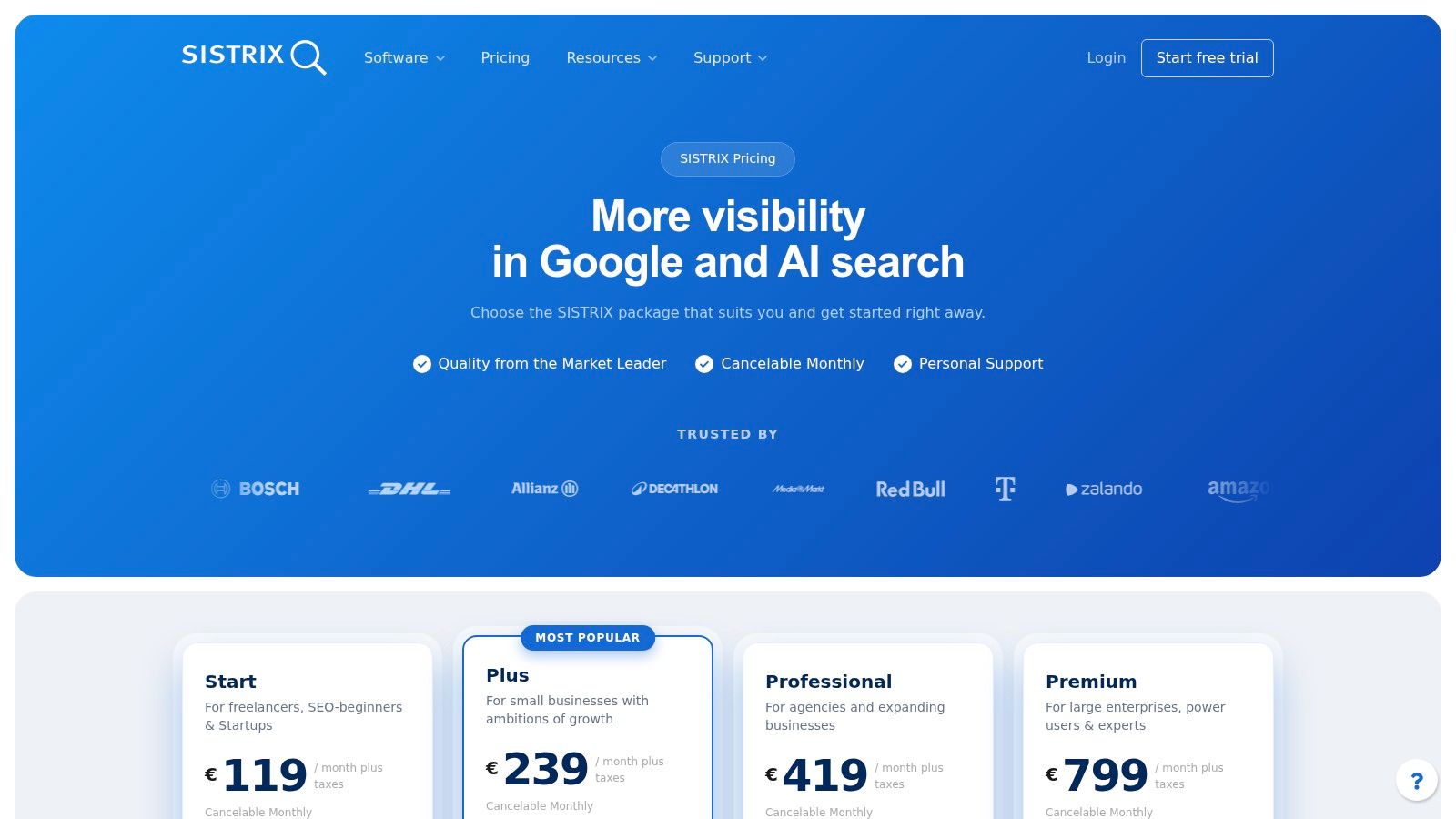
The Professional tier provides API access, and white-label PDF reporting supports client delivery. Pricing is listed in EUR with monthly cancellation, which is clear for European teams but requires exchange-rate consideration for U.S. buyers. The interface also follows conventions that differ from some U.S.-centric suites, so I'd allow time for onboarding rather than judging it after one exploratory login.
SISTRIX isn't the obvious replacement for every Ubersuggest user. A solo operator who only needs quick keyword ideas may find its modular approach heavier than necessary. An agency that needs historical baselines, country-level trend analysis, and branded reports may find that the additional structure saves time later.
10. Similarweb
Similarweb fits SEO teams that need market and audience context alongside organic search data. Its Competitive Intelligence and SEO package combines estimated website traffic, traffic sources, audience overlap, competitor analysis, and SEO modules. That combination helps distinguish a competitor's organic visibility from a wider market pattern.
Use it before entering a market, reviewing a competitor set, or explaining channel differences to stakeholders outside SEO. Keyword and competitor modules support research, but the platform earns its place when paid, referral, direct, audience, and market signals must be reviewed with organic performance.
Why it isn't a simple budget replacement
Similarweb pricing is not always public, and some tiers require a sales conversation. Advanced modules and stronger enterprise data are reserved for higher-tier packages. Ask for a workflow-specific demonstration instead of a generic tour. Confirm that the proposed plan covers the countries, competitors, exports, API access, and audience modules your team needs.
The main trade-off is coverage. Similarweb explains traffic context that Ubersuggest-style keyword reports do not, yet it does not replace a specialist SEO suite for every workflow. Competitor keyword-gap pulls, backlink prospecting, and SERP history checks still require dedicated SEO tools. Validate organic opportunities with ranking-page data and first-party Search Console performance.
Similarweb's package overview outlines its product families and how its intelligence and SEO capabilities are packaged. Similarweb works best as a market-intelligence layer, not as the only replacement for Ubersuggest.
Top 10 Ubersuggest Alternatives, Feature Comparison
| Narzędzie | Core features ✨ | Key strengths / USP | UX / Jakość ★ | Best for 👥 | Price / Value 💰 |
|---|---|---|---|---|---|
| SemDash (SemDash) 🏆 | Keyword (6.6B), Backlinks (2.7T), SERP history, AI briefs, URL‑level mapping | ✨ Fresh large datasets; backlink recovery workflows; AI Overviews; competitor reverse‑engineering | ★★★★☆ fast, simplified UI | 👥 SEO specialists, agencies, content teams, SMBs | 💰 Budget‑friendly; free trial |
| SE Ranking | Daily rank tracking, keyword & backlink research, site audit | ✨ Local SEO, reporting, Agency Pack | ★★★★☆ value‑focused | 👥 Freelancers, SMBs, agencies on budget | 💰 Low–mid cost |
| Serpstat | Keyword/domain research, rank tracker, site audit, backlinks | ✨ Generous exports, API credits on team tiers | ★★★☆☆ feature‑rich but complex | 👥 Teams & agencies needing exports | 💰 Mid; competitive annual pricing |
| Moz Pro | Keyword Explorer, site crawl, rank tracking, AI briefs (tiers) | ✨ Strong education & reporting | ★★★★☆ gentle learning curve | 👥 Beginners, reporting‑focused teams | 💰 Mid; clear tier quotas |
| SpyFu | Competitor SEO & PPC research, ad archives, historical SERPs | ✨ PPC + SEO competitive insights | ★★★☆☆ simple, focused UI | 👥 PPC/SEO competitors, small agencies | 💰 Low; affordable entry |
| Keyword Tool (Pro) | Autocomplete long‑tail ideas across Google, YouTube, Amazon | ✨ Cross‑platform keyword ideation, very fast | ★★★☆☆ lightweight & easy | 👥 Content creators, marketplace sellers | 💰 Low–mid; Pro for metrics |
| Semrush powiedział: | Full‑stack: keywords, rank tracking, audits, AI Visibility | ✨ Broadest single‑workspace coverage; AI answer tracking | ★★★★☆ enterprise features | 👥 Enterprises, agencies, teams needing all‑in‑one | 💰 Higher entry; add‑ons increase cost |
| Ahrefs powiedział: | Site Explorer, Keywords Explorer, crawler, rank tracker | ✨ Large link index; deep competitor/link analysis | ★★★★☆ powerful, steeper learning | 👥 Link‑focused teams, SEO analysts | 💰 Mid–high; clear limits |
| SISTRIX | Visibility Index, keyword research, rank tracking, modules | ✨ Long historical baselines, white‑label reporting | ★★★☆☆ mature EU‑centric UX | 👥 Agencies, EU market analysts | 💰 Mid (EUR pricing); modular |
| Similarweb | Traffic estimates, audience research, market & SEO modules | ✨ Market sizing & channel benchmarking at scale | ★★★☆☆ enterprise intelligence | 👥 Enterprises, market analysts, digital teams | 💰 High; custom pricing |
Choosing Your Ubersuggest Replacement Without Regret
Pick the tool that keeps your weekly workflow intact, not the one with the longest feature list. Start by writing down the tasks you consistently repeat: competitor keyword gap exports, top-page inspection, SERP history checks, backlink prospecting, technical audits, client reporting, or content clustering. Then remove tools that solve a different problem, even if their feature pages look impressive.
For a solo consultant or small content team, I'd start with SemDash, SE Ranking, Keyword Tool, or Moz Pro, depending on the work. SemDash is the most complete fit when competitor URLs, backlink recovery, SERP history, clustering, and AI citations need to live together. SE Ranking makes sense when reporting and rank monitoring carry more weight. Keyword Tool is enough for fast cross-platform idea generation, while Moz Pro suits teams that value clear education and manageable campaign reporting.
For agencies, the decision depends on the data workflow. SE Ranking and Serpstat offer broad coverage with reporting and automation options. Semrush earns its higher cost when the agency actively uses SEO, PPC, content, market, and AI visibility modules. SISTRIX is especially compelling for historical and European analysis, while Ahrefs remains the specialist choice for deep links and competitive research.
Test before switching: Export one competitor's keyword gap, pull its top pages, and check one SERP history view against your own data.
Run that same test during every free trial. Compare the useful rows, not just the headline count. Check whether each keyword maps to a relevant ranking URL, whether exports preserve the fields your briefs need, whether international results match your target market, and whether the backlink report helps you qualify prospects rather than just collect domains.
I also validate third-party volume directionally against first-party data. Search Console filters anonymized queries, and its interface export is capped at 1,000 rows, while the Search Analytics API can raise the ceiling to 50,000 rows per day for each search type, although Google warns that the limit may not be reached in every case. Google's Search performance data explanation is why I compare trends instead of expecting one tool's volume estimate to match site totals exactly.
Finally, calculate total operating cost. Include analyst time, export limits, separate backlink or SERP tools, API access, onboarding, reporting, and the effort required to turn findings into content briefs. A lower subscription can lose its advantage when the workflow fragments. For additional SEO implementation support beyond the software decision, see Aim Set Win.
Don't commit after a polished demo. Build one real competitor report, qualify a small backlink sample, inspect one volatile SERP, and draft one content brief from the output. The best Ubersuggest replacement is the platform that produces a decision your team can act on without rebuilding the process in spreadsheets.
SemDash brings keyword, backlink, SERP, competitor-page, clustering, and AI Overviews citation research into one fast workspace, with a free trial for testing your own markets. If that matches the workflow you're trying to preserve after leaving Ubersuggest, visit SemDash and run the same competitor gap and SERP-history test before choosing a plan.