%20(1)-B86R08ZzwhPzS6UZbG3mSxRWPCwGwn.png)


A bigger referring-domain count isn't the goal. I've seen too many audits go sideways because someone celebrated a total before checking whether those domains were relevant, unique, and worth contacting. My workflow starts with the target page, then the closest competitors, then domain-level deduplication, then anchor and page-context review, and only after that do I rank prospects by outreach value.
That's why the best referring domains checker depends on the job. Sometimes you need broad discovery, sometimes fast prospecting, sometimes historical cleanup, and sometimes a tool that fits neatly into a wider SEO stack. I compare these tools by how well they support discovery, deduplication, authority and topicality checks, competitor-gap research, outreach prioritization, recovery, and reporting, because a high count by itself doesn't tell you who to pitch or what to fix.
Spis treści
- 1. SemDash
- 2. Ahrefs Site Explorer and Backlink Checker
- 3. Semrush Backlink Analytics and Free Backlink Checker
- 4. Majestic Site Explorer and Referring Domains
- 5. Moz Link Explorer
- 6. SE Ranking Backlink Checker
- 7. Serpstat Backlink Analysis
- 8. Mangools LinkMiner
- 9. SEO PowerSuite SEO SpyGlass
- 10. Ubersuggest Backlinks Overview
- Top 10 Referring Domains Checkers
- Turn Referring-Domain Data Into a Work Queue
1. SemDash
SemDash is the first tool I'd use when the job is not just finding referring domains, but turning them into a usable workflow. It keeps backlink research, keyword discovery, SERP history, gap analysis, and AI-assisted briefs in one place, which cuts down the back-and-forth that usually slows audits. That matters because a useful outreach queue is built from pages, topics, and search intent, not from domain counts alone.
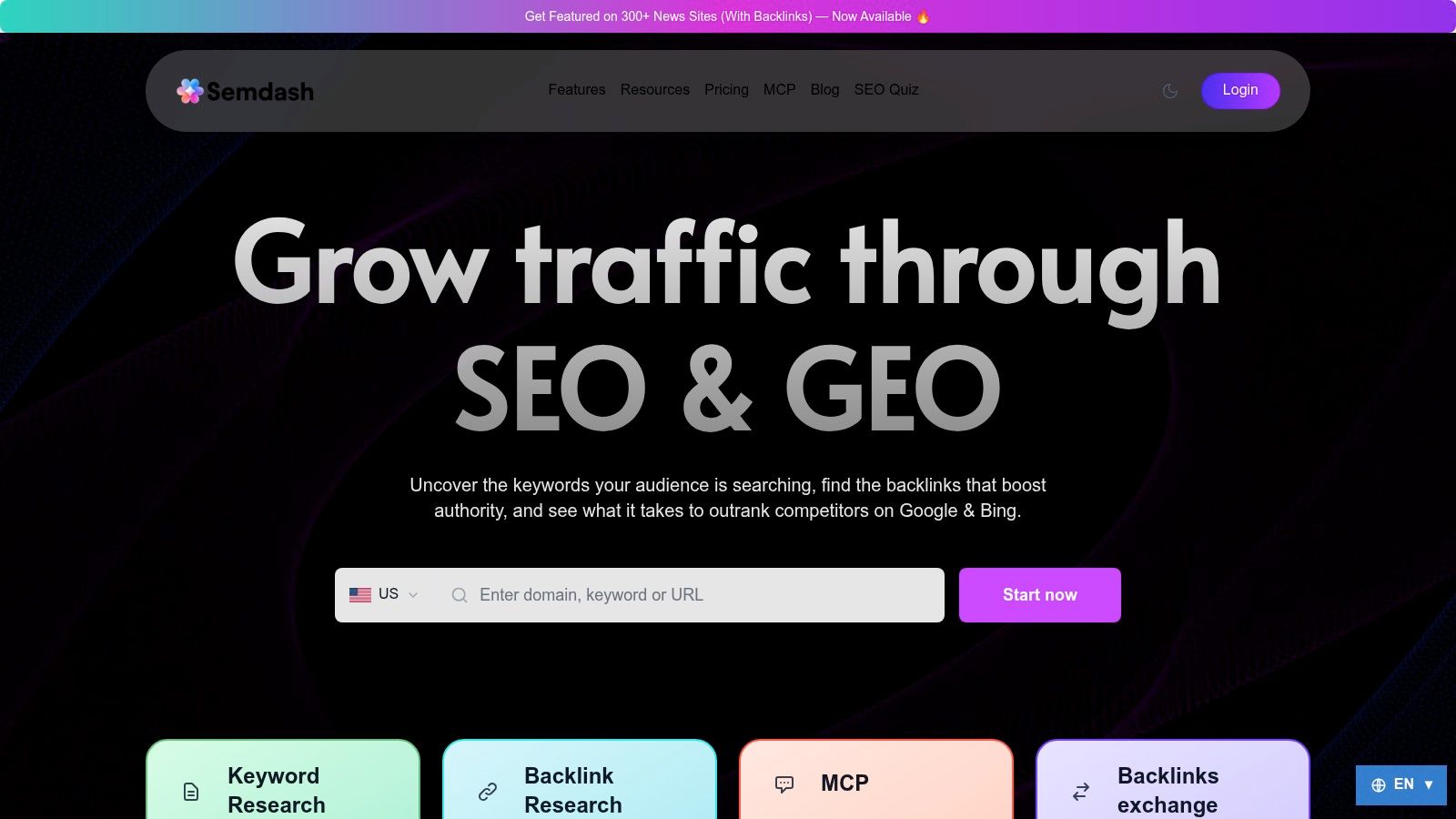
I use SemDash most often for backlink gap discovery and page-level sorting. It helps me check which URLs rank, which competitors own the space, and which mentions or broken links can become outreach targets. That reduces tool switching and makes it easier to hand off clean prospects to content or PR teams without losing the context behind each domain.
Praktyczna zasada: if you cannot tell which page earned the link, the data is too thin to start outreach.
SemDash also fits the recovery side of the work. Unlinked mentions, broken-link opportunities, and keyword gaps can sit in the same workflow, so a referring-domain list becomes something you can sort, verify, and assign. For current plans and features on SemDash (SemDash), the official site is the place to check what the platform includes now.
2. Ahrefs Site Explorer and Backlink Checker
Ahrefs stays near the top of my list for one reason, it's still one of the cleanest places to move from discovery to competitor-gap research. The Site Explorer workflow is strong when you need referring domains at domain, subdomain, or URL scope, then want to compare against competitors with Link Intersect or Domain Comparison. The free Backlink Checker is fine for a quick peek, but serious audits need the paid stack.
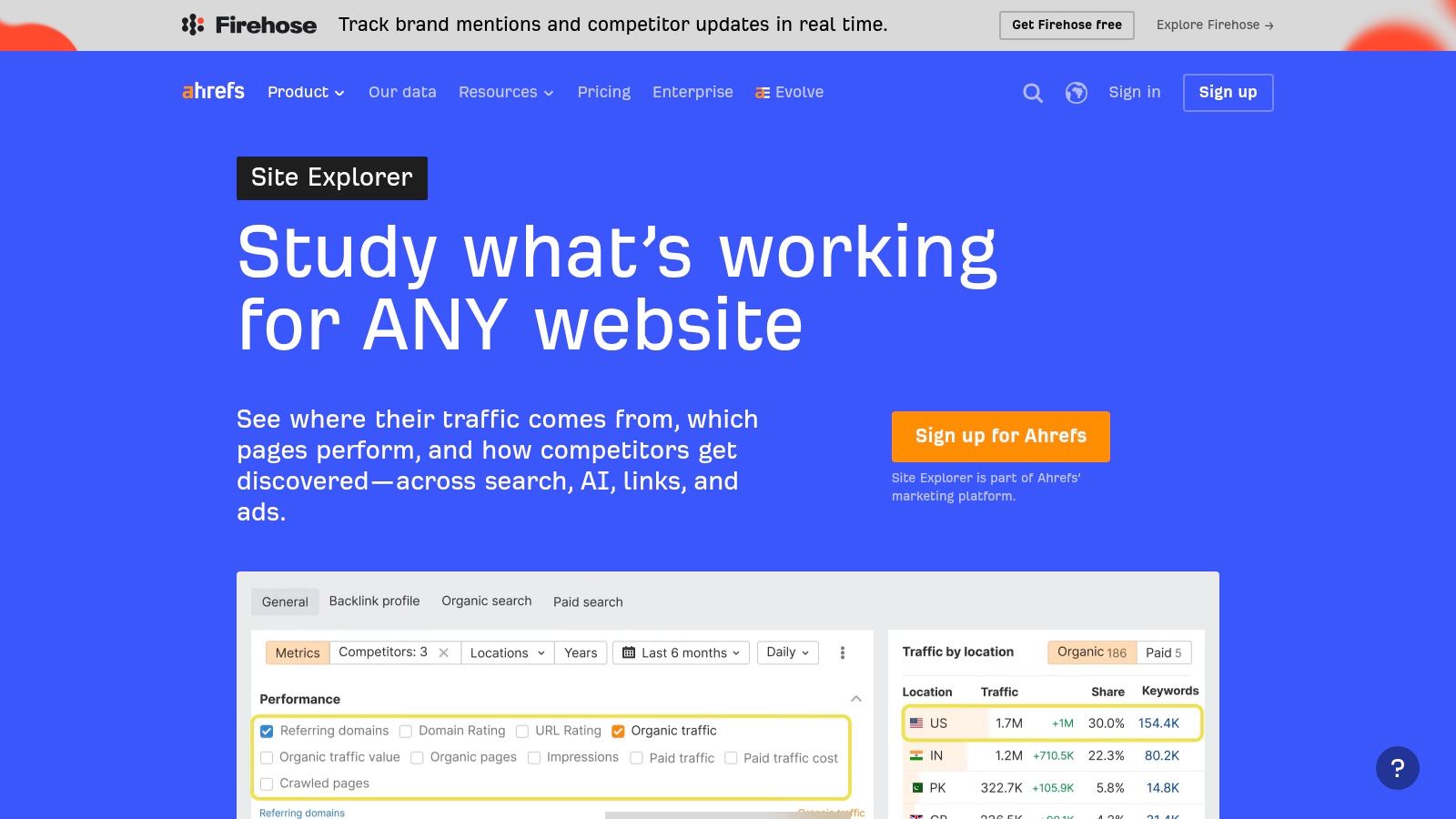
For real link work, I like Ahrefs when I need a broad, frequently refreshed index and a lot of room for export. Its backlink analysis is built for sorting through large sets, then narrowing them by anchors, referring IPs, subnets, and historical patterns. That makes it useful for agencies and in-house teams that need to explain why a domain matters, not just prove that it exists.
The trade-off is cost and depth. If I'm doing a lightweight audit or just checking one client's top referrers, it can feel like more tool than I need. But if I'm building a priority list from competitor overlap, Ahrefs is dependable because it helps me separate raw link volume from the domains that deserve outreach.
I use Ahrefs when I need the deepest competitive view, not when I want the cheapest snapshot.
For teams that want a more strategic breakdown of competitor backlink workflows, I'd pair it with the related guidance in SemDash's competitor backlink analysis guide, then use Ahrefs for the heavy lifting.
3. Semrush Backlink Analytics and Free Backlink Checker
Semrush is the most practical choice when backlink work needs to sit alongside audits, rank tracking, and broader campaign reporting. The Backlink Analytics module surfaces referring domains, new and lost links, anchors, filters, and historical dynamics, which makes it good for teams that don't want backlinks trapped in a separate workflow. I've found it especially useful when reporting needs to speak to multiple stakeholders, because the link data lives inside a suite many marketers already understand.
Semrush works best as a reporting and monitoring layer. If I'm checking whether a campaign moved the needle, the new and lost link view gives me a cleaner narrative than a raw export, and the surrounding modules help connect link gains to site health and rankings. That's valuable when the question isn't just “who links here,” but “did those links support the pages we wanted to grow.”
The weak spot is that the starting cost can feel heavy for smaller teams, and the deeper exports are gated. For a quick check, the free Backlink Checker is enough to see the shape of a profile, but I wouldn't rely on it alone for a link-building sprint or a cleanup project. I'd use it when the organization already lives in Semrush and wants backlinks to feed the broader SEO program instead of a standalone audit.
If I'm honest, Semrush is less about raw exploration and more about operational consistency. That's not a flaw. It just means the tool is strongest when the team cares about workflow continuity, not when it only wants the deepest possible link crawl.
4. Majestic Site Explorer and Referring Domains
Majestic is the specialist's tool in this group, and I still reach for it when authority and topicality matter more than a pretty dashboard. Its Fresh and Historic indexes are useful when I need to compare current signals against older link patterns, and the combination of Trust Flow, Topical Trust Flow, Link Context, and Link Graph gives me more to work with than a simple count. That matters because a referring-domain list can look healthy while still being packed with off-topic or weakly placed links.
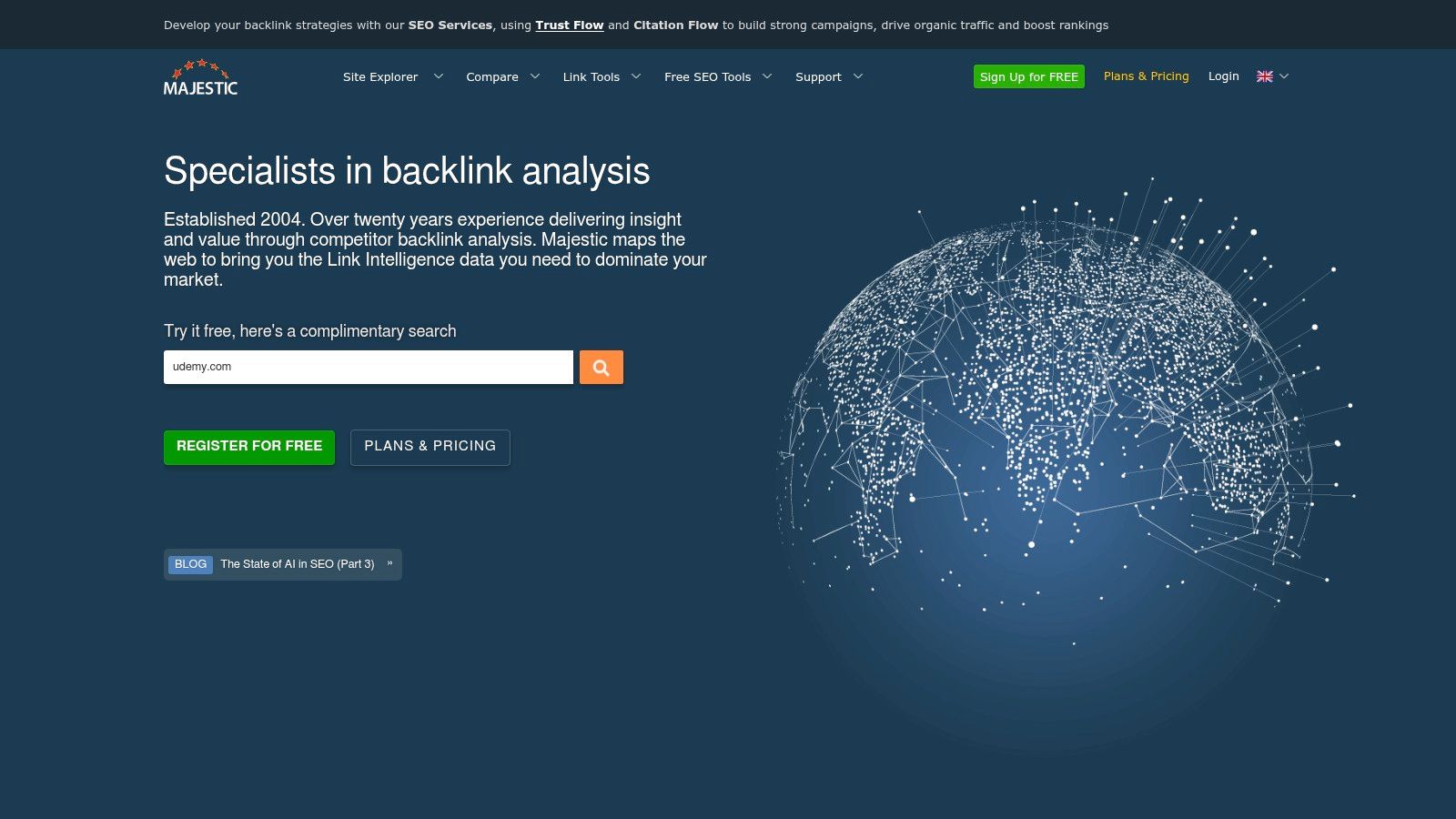
Majestic is the tool I use when I want to answer a harder question, not just “how many domains link here,” but “which domains are worth trusting?” The platform's linking context helps me separate editorial placements from links that sit in noisy or low-value areas. That makes it especially useful for cleanup, outreach prioritization, and competitive audits where topical fit matters as much as volume.
Where Majestic Helps Most
- Trust checks: I use the trust metrics to screen referrers before they enter an outreach queue.
- Topical filtering: The topical layer helps me spot mismatched domains fast.
- Historical review: The historic index is useful when I need to explain link growth or loss over time.
The learning curve is real, though. Majestic feels technical, and that's part of the appeal for link specialists. If you want a broad SEO suite, this isn't the easiest fit. If you want a dedicated link-analysis lens that lets you evaluate referring domains by theme, context, and overlap, it still earns a place in a serious workflow. For teams doing forensic audits, that specificity is often more valuable than convenience.
5. Moz Link Explorer
Moz is still one of the easiest tools to explain to stakeholders because the interface is straightforward and the familiar DA/PA context gives non-SEOs something they recognize. I use Link Explorer when I need a quick read on linkujące domeny, new and lost domain activity, and basic competitor comparison without asking the team to learn a more technical backlink platform. The CSV export and filter options are enough for most small-to-mid audits.
The strength of Moz is clarity. If I'm reviewing a client's link profile with a marketer who doesn't live inside SEO tools every day, Moz is often easier to discuss than a denser platform. That's especially true when I want to show whether the referring-domain profile is broadening, narrowing, or getting lopsided toward a small number of sites.
The limitation is depth. When I'm dealing with very large competitors or trying to uncover obscure link opportunities, I usually want a larger index and more granular context than Moz provides. I also watch the plan limits closely, because exports and row caps can get in the way once the audit becomes operational instead of exploratory.
Moz works best for baseline reporting and light competitive scans. It's not my first pick for aggressive gap mining, but it's a comfortable tool for teams that need a readable snapshot and a vocabulary that won't confuse the rest of the business. When the job is to communicate link breadth clearly, that simplicity is a real advantage.
6. SE Ranking Backlink Checker
SE Ranking earns its place because it's practical. The backlink checker gives you referring domains, IPs, subnets, follow and nofollow breakdowns, anchors, toxicity scoring, and gap analysis, which is enough to turn a raw profile into a triaged task list. I like it for teams that want prioritization without paying for a massive enterprise stack.
This is the tool I'd use when I need a quick answer to two questions, which domains look worth pursuing, and which ones look risky or noisy. The toxicity layer helps me filter early, which saves time before outreach or cleanup work starts. That makes it useful for smaller in-house teams and agencies that need to move quickly across multiple clients.
SE Ranking is especially useful when link building and risk management happen in the same meeting. I've seen teams waste hours manually sorting through obvious junk when the tool could have pushed those domains down the list much faster. The API support is also helpful for teams that want to pull referring-domain summaries into internal dashboards.
The main trade-off is access. Some of the stronger monitoring and export features sit behind plan tiers or add-ons, so the tool can feel more limited than it first appears. Still, if the goal is to build a clean outreach queue from a readable backlink layer, SE Ranking does that job well. It's not the deepest index in this comparison, but it's one of the easier places to get from raw data to action.
7. Serpstat Backlink Analysis
Serpstat is a good fit when the workflow is built around batch comparison and practical exports. The Referring Domains report, SDR metric, top pages by backlinks and referring domains, and URL recrawling make it useful for teams that want to refresh target data and move it into outreach or disavow work. I've found it especially helpful when the question is less about prestige and more about keeping the backlog manageable.
What stands out in Serpstat is how it supports repeated analysis. If I'm comparing several competitors, the batch and domain comparison features let me see where the opportunities cluster. That's helpful for prospecting because I can identify domains that repeatedly link in the niche, then sort them by relevance instead of hunting one by one.
The exports matter too. CSV, XLS, XLSX, and Sheets support make it easy to hand the data to another analyst or drop it into a pipeline. That's the sort of detail that saves time when link work is part of a bigger campaign and not a one-off audit.
Why I'd Choose Serpstat
- Batch workflows: useful when I'm comparing several rivals at once.
- Refresh options: the recrawl tool helps when target data feels stale.
- Operational exports: easy to move into outreach or cleanup workflows.
Serpstat does feel busy at first, and that learning curve is real. But once a team gets past the interface, it becomes a solid working tool for referring-domain analysis that has to end in a concrete list of prospects or cleanup items. It's less glamorous than some alternatives, but it gets the job done.
8. Mangools LinkMiner
Mangools LinkMiner is one of the best prospecting tools in the group when I want a quick look at breadth over volume. The one link per ref. domain option is the feature I care about most, because it forces me to dedupe early and avoids the common mistake of overvaluing repeated links from the same site. That small detail changes how fast I can tell whether a profile has real domain diversity.
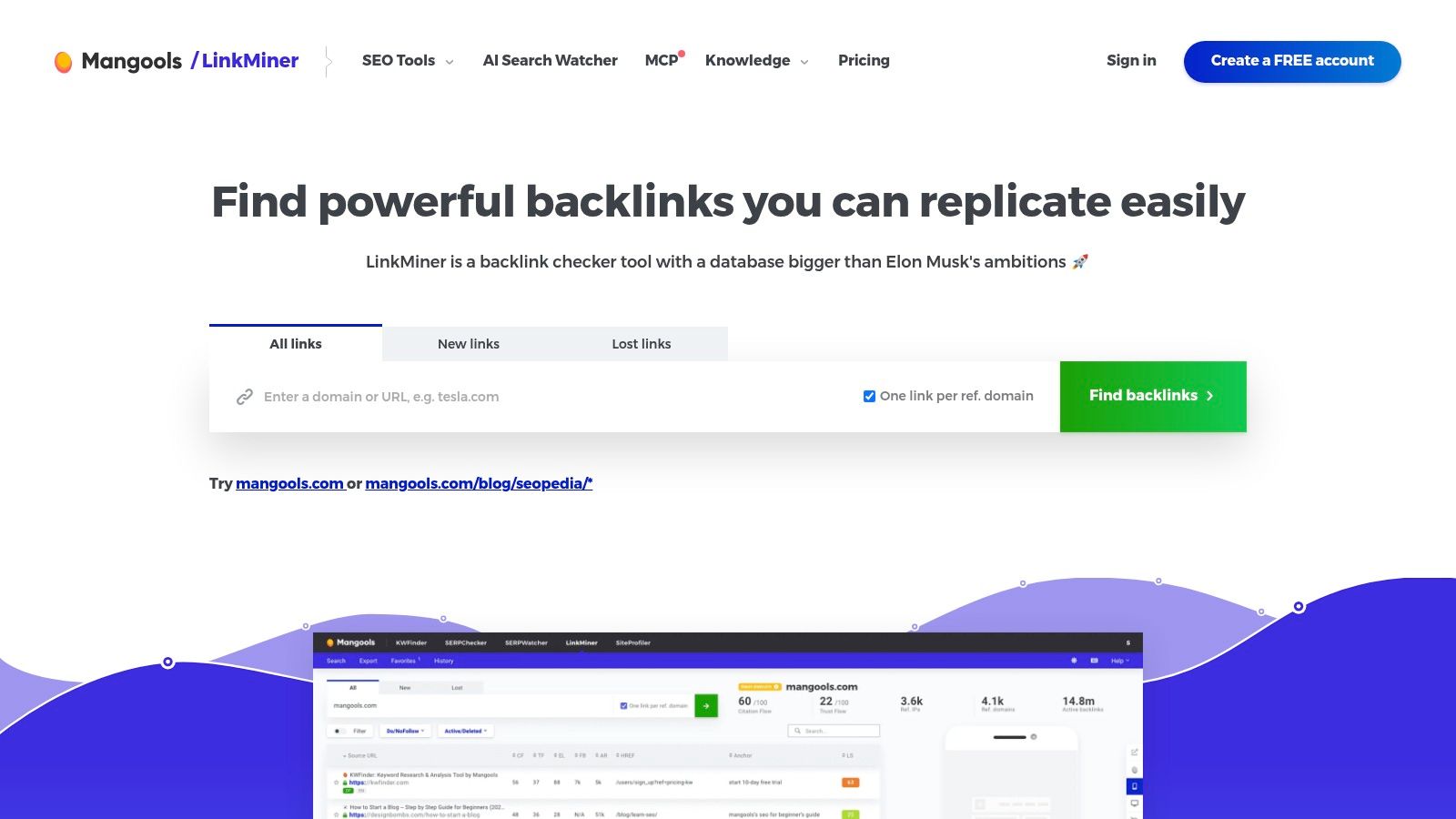
LinkMiner is simple in a good way. The page preview and anchor highlight make context checks fast, so I can decide whether a referrer belongs in an outreach list without opening ten tabs. The Link Strength metric helps with quick prioritization, though I still sanity-check the actual placement before I pitch anything.
This is the tool I'd use when a team wants affordable link prospecting without learning a more complex platform. It also pairs nicely with the rest of the Mangools suite if the user is already doing keyword work there. The downside is obvious, it doesn't try to match the historical depth or enterprise features of the biggest backlink databases.
For small teams, that trade-off can be fine. The question isn't whether LinkMiner does everything, because it doesn't. The question is whether it helps you move from a raw referring-domain list to a cleaner shortlist fast enough to matter. On that job, it's useful.
9. SEO PowerSuite SEO SpyGlass
SEO SpyGlass is the desktop option I'd pick when I want local control and large exports. The tool combines linking-domain views with referring IPs and C-block analysis, risk scoring, disavow list creation, and imports from Google Search Console and Analytics. That makes it a strong fit for agencies that audit a lot of sites and don't want every workflow tied to a browser tab.
The biggest practical advantage is control over the data once it's on the machine. I've used desktop workflows when I needed to inspect large link sets without the friction of web app limits or when the reporting had to stay inside a local process. The bulk comparison features are also helpful for competitor RD analysis, especially when a team wants to compare several domains offline.
The trade-off is collaboration. Desktop software is less convenient for distributed teams that want everyone inside the same live workspace. It also asks for more setup and maintenance than SaaS tools, which can be annoying if you just want to check a profile and move on.
Najlepsze dopasowanie: agencies that value export control and disavow workflows more than shared browser-based collaboration.
SEO SpyGlass works best when the referring-domain job is tied to audits, recovery, or compliance. If the plan is to build a defensible cleanup list from local data and keep the process auditable, it's a strong choice. If the plan is to run collaborative backlink research across a marketing team, a cloud platform will usually be easier.
10. Ubersuggest Backlinks Overview
Ubersuggest works well for a quick, low-friction referring domains checker when the job is to get an answer fast and move on. The Backlinks Overview gives a usable snapshot of total backlinks, referring domains, DA, new and lost trends, and top pages. That is enough for first-pass discovery, a rough dedupe check, and a quick read on whether a site deserves deeper review.
I use it most often for triage. On a small brand, a newer site, or a competitor I only need to size up at a high level, Ubersuggest helps me identify where to look next without getting buried in filters. The Backlink Opportunity report is useful for competitor-gap research, because it points toward domains that may also be worth outreach. That turns a broad list into a starting queue, not a final one.
The low learning curve matters in practice. I can hand it to a founder or junior marketer, and they can read the basics without a long walkthrough. That makes it easier to separate likely opportunities from noise before anyone spends time on manual checks.
The trade-off is depth. Its data and index size trail the larger crawlers, so I would not use it alone for serious link acquisition or cleanup decisions. For recovery work, authority checks, or a defensible outreach list, I would verify the strongest prospects in a deeper tool before acting. Ubersuggest is the tool I recommend for a quick, low-friction look at referring domains, especially when you do not want to spend time learning a complex interface.
Top 10 Referring Domains Checkers
| Narzędzie | Kluczowe funkcje | Unikalne punkty sprzedaży ✨ | Quality ★ | Price/value 💰 | Grupa docelowa 👥 |
|---|---|---|---|---|---|
| SemDash 🏆 | 6.6B KW, 2.7T links, 12‑mo SERP, URL‑level mapping, AI briefs | ✨ AI Overviews (citation tracking), backlink‑gap, unlinked‑mention recovery, keyword clustering | ★★★★☆ | 💰 Affordable tiers + free trial | 👥 SEO specialists, agencies, content teams, SMBs, SaaS/e‑commerce |
| Ahrefs, Site Explorer | Deep backlink index, Referring domains, Link Intersect, exports | ✨ Large, frequently refreshed crawler & powerful batch tools | ★★★★★ | 💰 Mid–high (enterprise pricing) | 👥 SEO pros, link builders, agencies, enterprises |
| Semrush, Backlink Analytics | Backlinks + filters, historical trends, integrates with Site Audit & Tracking | ✨ All‑in‑one SEO workflows across modules | ★★★★☆ | 💰 Mid–high subscription tiers | 👥 Marketing teams, in‑house SEOs, agencies |
| Majestic, Site Explorer | Fresh & Historic indexes, Referring domains, Link Graph | ✨ Trust Flow & Topical Trust Flow for link topicality/trust | ★★★★☆ | 💰 Mid, transparent resource limits | 👥 Link analysts, researchers, SEOs focused on link trust |
| Moz, Link Explorer | Linking domains, DA/PA, spam indicators, CSV export | ✨ Familiar DA/PA signals and easy reporting | ★★★☆☆ | 💰 Mid; export/rows limited by plan | 👥 SMBs, agencies, stakeholders wanting simple metrics |
| SE Ranking, Backlink Checker | RD counts, follow/nofollow, toxicity scoring, API & monitoring | ✨ Toxicity flags + gap analysis + API endpoints | ★★★★☆ | 💰 Value-oriented plans | 👥 SMBs, budget-conscious agencies, growth teams |
| Serpstat, Backlink Analysis | Referring domains, Top Pages, anchors, batch comparisons | ✨ Batch exports & URL recrawl for outreach workflows | ★★★★☆ | 💰 Mid; API/limits on higher plans | 👥 Agencies, in‑house teams needing exports |
| Mangools, LinkMiner | RD counts, anchor‑in‑context, dedupe "one link per ref." toggle | ✨ Fast, simple prospecting UI for link opportunities | ★★★☆☆ | 💰 Budget-friendly suite | 👥 Freelancers, small agencies, beginners |
| SEO PowerSuite, SEO SpyGlass | Desktop backlink auditor, disavow builder, GSC/GA import | ✨ One‑time license, large exports & local control | ★★★★☆ | 💰 One‑time license (cost‑effective for heavy exports) | 👥 Agencies needing bulk exports & offline workflows |
| Ubersuggest, Backlinks Overview | Total backlinks, RD trends, Top Pages, PDF exports | ✨ Low learning curve + lifetime pricing option | ★★★☆☆ | 💰 Low-cost + free tier, lifetime available | 👥 Small sites, bloggers, beginners |
Turn Referring-Domain Data Into a Work Queue
The process I trust is simple, but it has to happen in order. First, I establish the target URL and the closest competitors. Then I collect referring domains, deduplicate at the domain level, and separate the editorial opportunities from the low-value or risky patterns that don't deserve attention. After that, I inspect anchor text, page context, and topical fit, then rank the prospects by likely placement quality and realistic contactability.
That order matters because raw referring-domain counts can mislead you. Google Search Console's Links report shows “Top linking sites” as root domains, and Google omits subdomains in that view, which means a GSC count won't always line up with a third-party backlink tool. GSC also shows only a sample of known links, so mismatches are normal, and I treat them as a signal to investigate the biggest gaps rather than assume one source is broken.
I also document the tool and the date every time I export. Different indexes surface different slices of the web, and the same site can look slightly different depending on refresh timing, crawl depth, or whether the report is showing historical or fresh data. That's why I never use one export in isolation when I'm making outreach or cleanup decisions.
What turns the data into action is the filtering layer. I look for domains that are relevant, editorial, and contactable, then I push duplicates, sitewide placements, redirected paths, syndicated copies, and weak context down the list. If a site has a lot of links from only a few domains, I treat that differently from a broad, healthy spread of unique referrers, because breadth usually signals stronger citation diversity.
When the link job has to connect to keyword research, competitor gaps, unlinked mentions, broken-link recovery, and SERP context in one place, SemDash is the tool I'd reach for first. It's the most efficient option when the goal is not just counting referring domains, but turning them into a repeatable outreach queue that the rest of the SEO team can use.
If you want one place to inspect referring domains, compare competitor gaps, and connect those findings to keyword and SERP work, SemDash (SemDash) is built for that workflow. It gives you the backlink research and content-planning context you need to turn link data into decisions. Visit SemDash and see how quickly a raw referring-domain list can become a cleaner outreach queue.