%20(1)-B86R08ZzwhPzS6UZbG3mSxRWPCwGwn.png)


Teams choose an organic traffic tool by price or brand recognition, then build a content calendar from a keyword export. That workflow fails when the export doesn't show which page ranks, what the searcher wants, or whether a competitor already owns the useful SERP features. A large keyword list can create more publishing activity without creating better decisions.
I judge tools by the job they handle best. Some are strongest at discovery, others at planning, measurement, link analysis, or monitoring. I use those jobs separately because no single platform handles every part of organic acquisition equally well. Organic search has historically been a major acquisition channel. BrightEdge attributed 53% of trackable website traffic to organic search in research based on thousands of domains and tens of billions of sessions measured in May 2019, compared with 15% from paid search i 5% from organic social. The underlying channel-share context is available here.
This list focuses on practical use. I'll explain where each tool earns its place, when I'd open it, and where it falls short. If you're comparing SEO software with wider marketing systems, my guide to AI marketing tools for marketers gives useful context.
Spis treści
- 1. SemDash
- 2. Semrush
- 3. Ahrefs
- 4. Similarweb
- 5. Moz Pro
- 6. SE Ranking
- 7. Serpstat
- 8. SISTRIX
- 9. Majestic
- 10. seoClarity
- Top 10 Organic Traffic Tools Comparison
- Match the Tool to Your Bottleneck, Then Start
1. SemDash
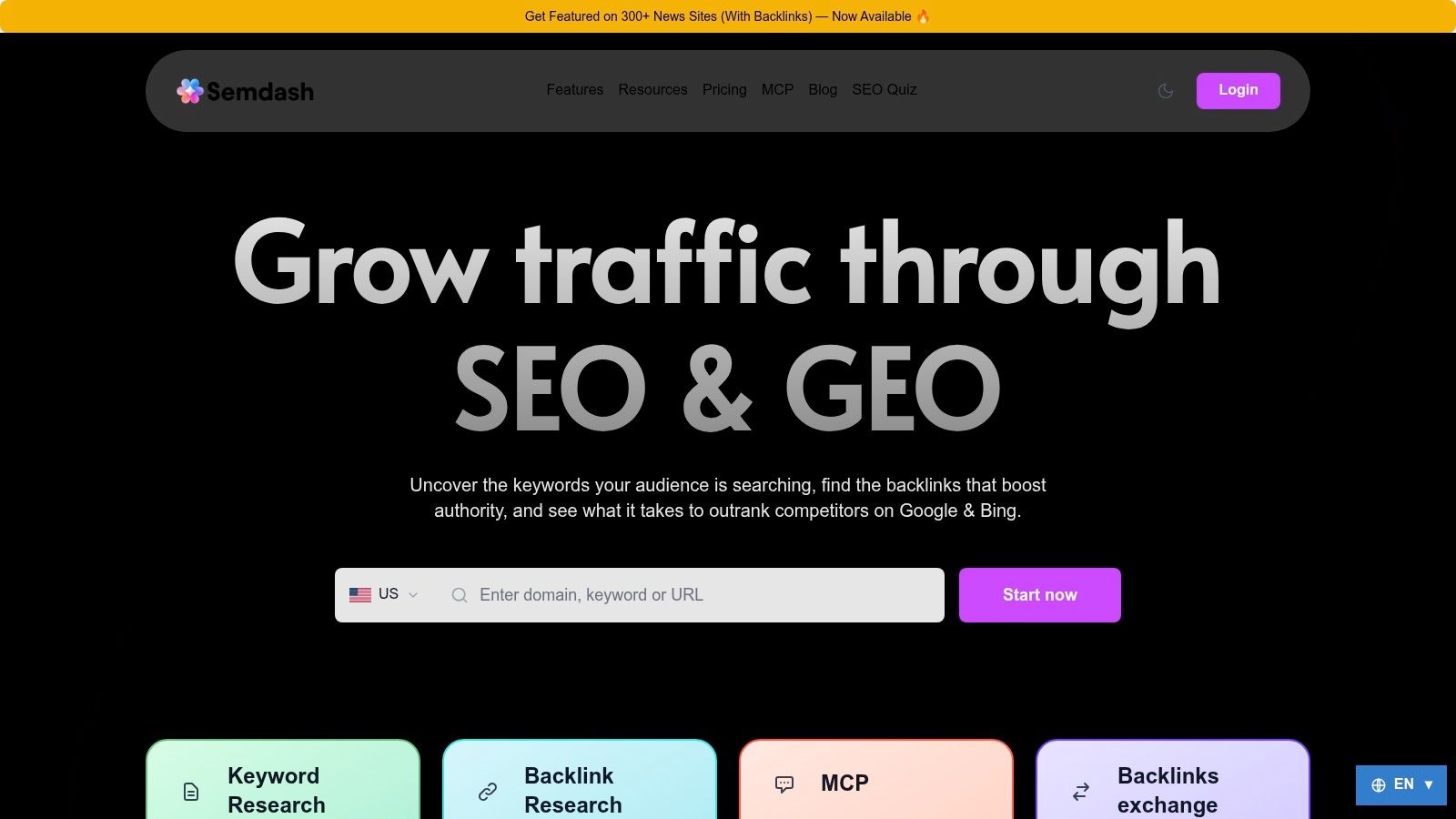
SemDash is the tool I'd open first when the job is turning competitor research into page-level content and link actions. Its cloud-first workspace brings keyword, backlink, and SERP data together, so I can move from a competitor domain to the exact ranking URL, the query cluster behind it, and the referring domains supporting that page.
That page-level view changes how I plan. A domain traffic estimate tells me that a competitor is visible. It doesn't tell me whether one guide, a product page, or dozens of small articles create that visibility. SemDash's Domain Keywords, Keyword Gap, Top Pages, and Traffic Share reports let me isolate the pages and terms worth investigating. Its keyword database contains 6,6 miliarda słów kluczowych Google, while its backlink index contains 2.7 trillion links and its SERP dataset includes 600 million refreshed SERPs. Those figures are product data supplied by SemDash, not performance guarantees.
Why I use it for planning
I use SemDash when a team needs a defensible answer to, “What should this page target?” URL-level mapping shows the precise page ranking for each keyword. Keyword clustering helps group related queries into page-sized topics, which reduces the risk of publishing several articles that compete with one another.
The live SERP workflow is also practical. Intent classification, People Also Ask and People Also Search suggestions, SERP history, and AI content briefs help me see whether the current results favour guides, category pages, comparisons, or another format. The MCP connection for Claude and ChatGPT can bring live SEO data into an AI-assisted workflow, but I still review the SERP before approving a brief.
Praktyczna zasada: Treat the page-keyword pair as the planning unit. A keyword without its ranking URL and SERP context is only a lead.
SemDash also handles link prioritisation well. Backlink Gap identifies domains linking to competitors but not to the site I'm analysing. Anchor context, unlinked brand mentions, and broken-link recovery help turn outreach into a focused queue instead of a generic prospect list. Its AI Overviews visibility report adds another layer by identifying triggering queries and the exact URLs cited in Google's generated answers.
Gdzie się nie sprawdza
I wouldn't choose SemDash for an enterprise workflow that depends on extensive bulk or multi-domain batch analysis unless the required limits are confirmed first. Some advanced users also report lower absolute keyword counts for certain domains than larger legacy platforms, so I compare coverage on the actual market and country before switching a team over.
Best job: competitor-led content and link planning.
Use it when: you need ranking URLs, gaps, SERP history, and backlink opportunities in one workspace.
Limitation: coverage and bulk-analysis depth can vary by niche and plan.
Strona internetowa: SemDash (SemDash)
2. Semrush
Semrush works best when I need a broad operating system for an agency or marketing team. I can research keywords, audit a site, track rankings, review backlinks, build reports, and connect Google Search Console or Google Analytics without moving between several specialist tools.
That breadth is useful during a weekly delivery cycle. I might use Keyword Gap to shape discovery, Site Audit to identify technical blockers, On-Page SEO Checker to review a priority URL, and share-of-voice reporting for the client update. The platform also supports content, local, and PR workflows, with optional market and traffic intelligence and AI Visibility or AEO modules.
The trade-off is packaging. Costs rise as I add users, limits, or separate modules, and some advanced market and AEO capabilities sit outside the core workflow. I check the actual plan against the team's reporting volume before recommending it, because a wide feature list can hide the operational cost of running each module.
For a deeper comparison of traffic-estimation positioning, I use this Semrush and Similarweb comparison. I wouldn't pick Semrush solely for backlink depth when link acquisition is the central job. I'd pick it when the team values one mature interface across technical SEO, research, reporting, and adjacent marketing work.
Best job: all-in-one SEO operations.
Use it when: several specialists need shared reporting and connected workflows.
Limitation: modular pricing can make a simple use case expensive.
Strona internetowa: Semrush powiedział:
3. Ahrefs
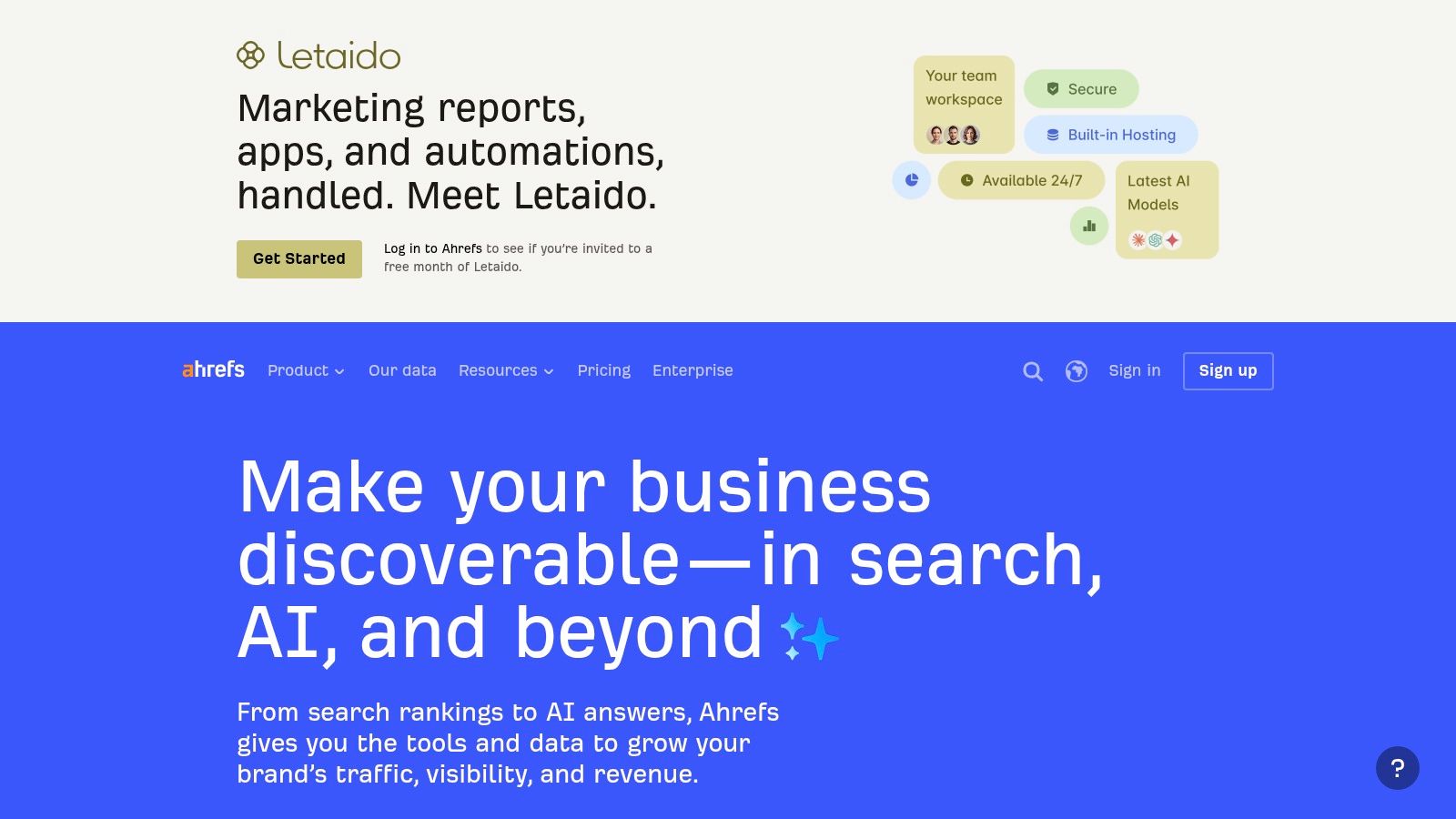
Ahrefs earns its place when the job is reverse-engineering competitors at the URL and link level. Site Explorer gives me a fast view of the pages and queries driving another domain, while Keywords Explorer and SERP analysis help test whether an apparent opportunity matches the intended market.
I use Content Explorer when I need to find topics that already attract links or identify competing formats worth studying. That research is more useful than copying a competitor's keyword list because I can inspect the page structure, link profile, and content angle together. Site Audit and rank tracking then cover the basic implementation and monitoring work.
The strongest part remains backlink analysis. Ahrefs gives a clean workflow for checking referring domains, linked pages, anchors, and competing content. When I'm deciding whether a new guide needs better internal links, stronger evidence, or external authority, that context is more actionable than a domain-level authority score.
The limitation is budget control. Higher limits and advanced features can become expensive, and exports or add-ons are quota-sensitive for teams. I also avoid treating its database as a universal answer. For a specific country or niche, I compare the terms and links it finds with another source and with Search Console before making a large publishing decision.
Best job: link-led competitive research.
Use it when: competitor pages and referring domains determine your next move.
Limitation: limits and exports need careful management.
Strona internetowa: Ahrefs powiedział:
4. Similarweb
Similarweb is the strongest option here for outside-in market and traffic measurement. I use it when first-party analytics can explain my own site but can't show how a competitor divides acquisition across organic search, referrals, paid channels, and other sources.
That distinction matters during market sizing. Similarweb offers traffic and engagement estimates for domains, channel-share views, geography, audience overlap, referral sources, top pages, and keywords. I can compare several competitors, identify the sites attracting attention in a category, and then use those findings to prioritise subjects for deeper SEO research.
I don't treat its estimates as analytics. They can vary for small sites, and the result is an external model rather than a clean record of sessions, conversions, or revenue. I validate important conclusions against Search Console, analytics, and the ranking URLs found in a dedicated SEO platform.
The most useful workflow is sequential. I use Similarweb to decide which competitors and market segments deserve attention. Then I open the relevant pages in SemDash, Semrush, or Ahrefs to inspect queries, SERP composition, backlinks, and content gaps. This prevents a market estimate from turning directly into a content brief without page-level evidence.
For a focused comparison of traffic-estimation platforms, I'd also use this traffic estimation tools guide.
Best job: market sizing and competitor channel benchmarking.
Use it when: you need external context beyond your own analytics.
Limitation: estimates are less dependable for small or low-volume sites.
Strona internetowa: Similarweb
5. Moz Pro
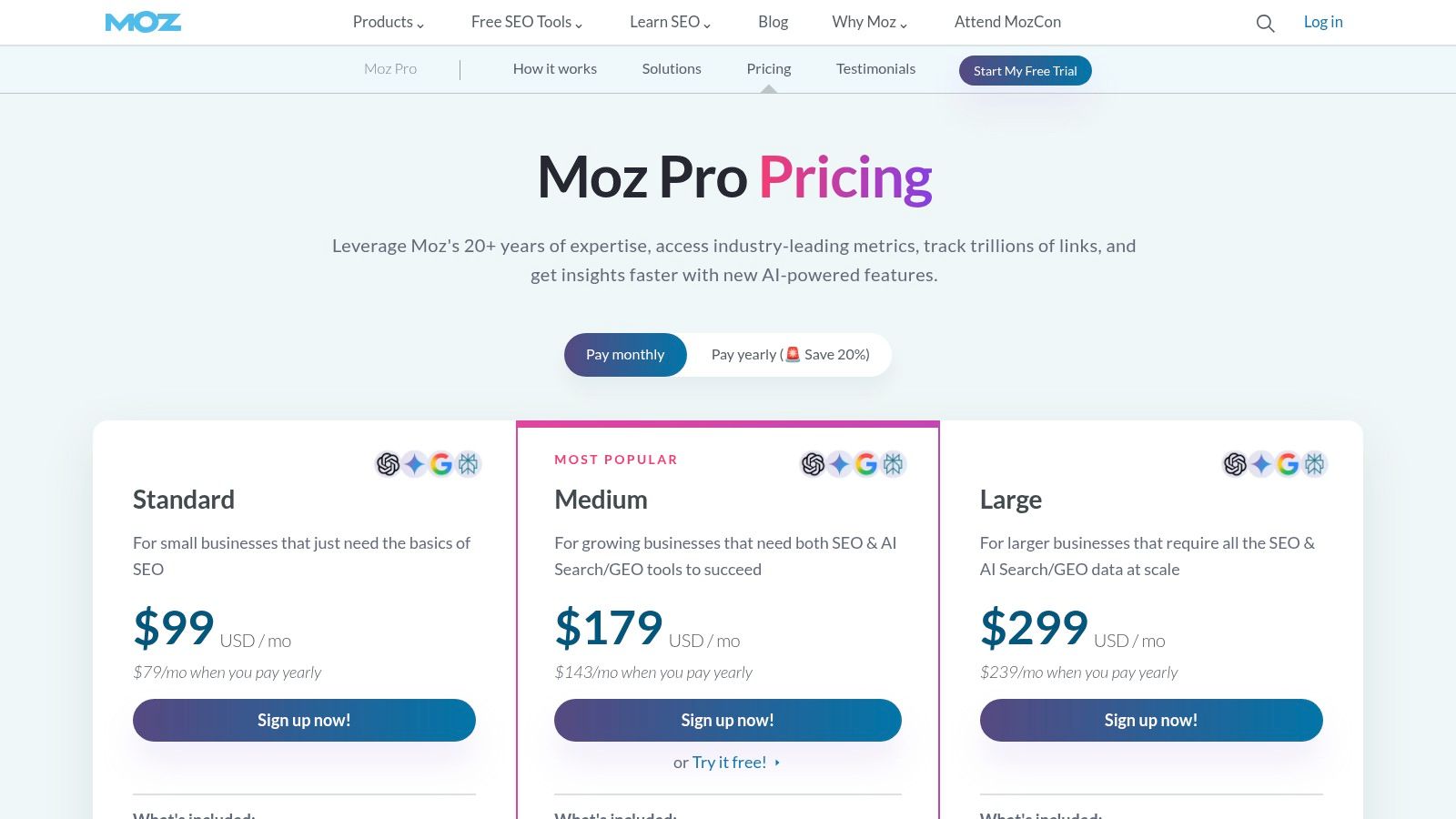
Moz Pro works best for straightforward SMB SEO management. I'd put it in front of a small marketing team that needs keyword research, rank tracking, site audits, and link metrics without a steep onboarding process.
The interface is approachable, and the plan structure is easy to explain. Keyword Explorer provides difficulty and SERP context, while Site Crawl and rank tracking cover recurring maintenance. Link Explorer supplies Domain Authority and Page Authority, which many teams already understand and use as shorthand during stakeholder conversations.
That shorthand needs discipline. I use DA and PA for comparative research, not as a substitute for relevance, indexation, search intent, or conversions. A page with a familiar score can still target the wrong query or fail to satisfy the result format Google is showing.
Moz Pro's weakness appears when link research becomes the main task. Its link index is less deep than specialist link databases, and entry tiers can have lower quotas than competing platforms. Higher-tier AI and AEO dashboards may help teams tracking prompt visibility, but I confirm exactly what the plan includes before building a reporting process around them.
I choose Moz when clarity and adoption matter more than maximum data depth. I don't choose it when an agency needs aggressive bulk link discovery or highly granular competitor prospecting.
Best job: approachable SEO management for smaller teams.
Use it when: users need a clear workflow with familiar metrics.
Limitation: link depth and entry-level quotas can constrain advanced research.
Strona internetowa: Moz Pro
6. SE Ranking
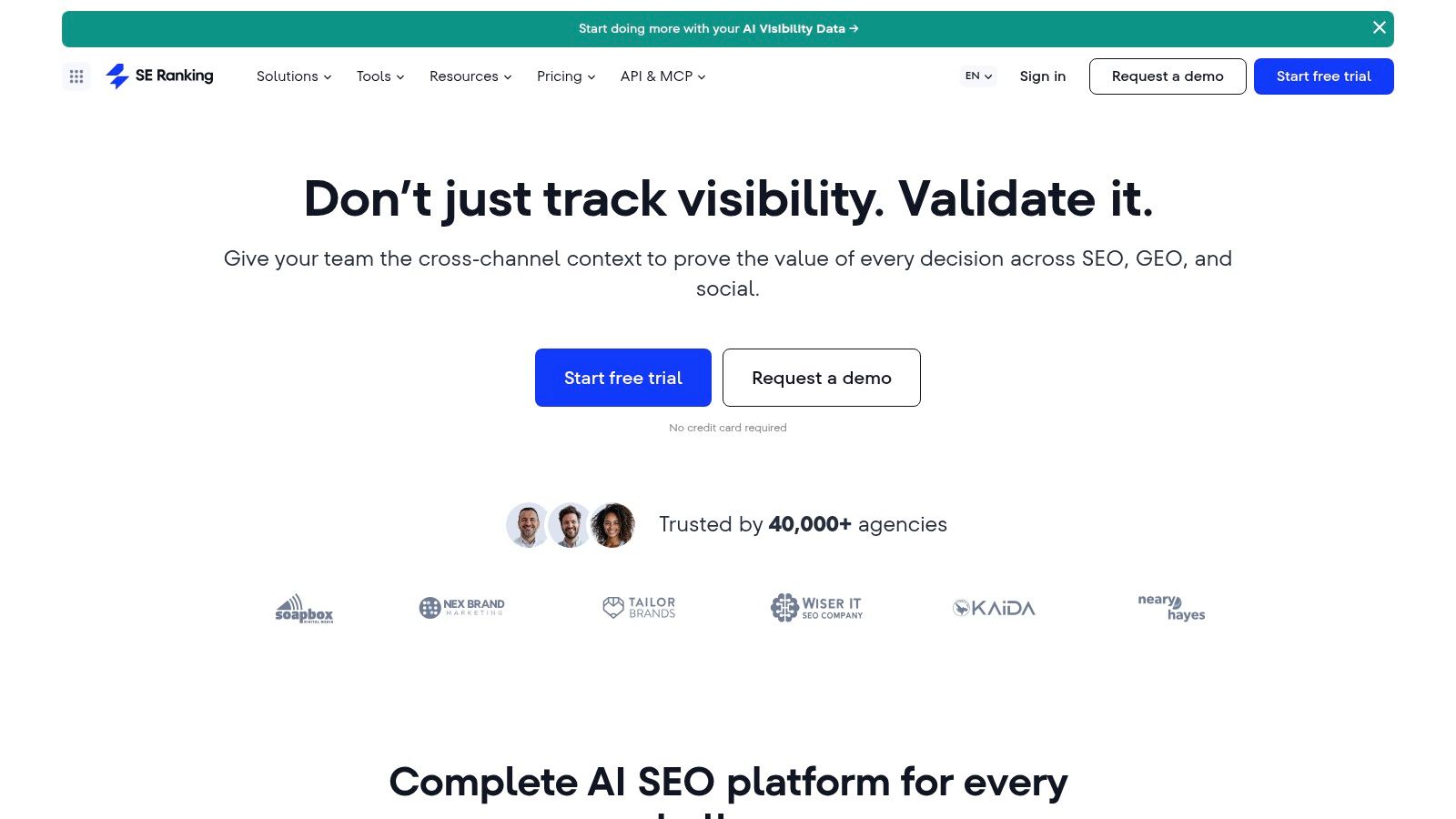
SE Ranking is the tool I'd consider when the job is covering a broad SEO workflow without paying for the largest suite. It combines rank tracking, keyword and competitor research, backlink monitoring, audits, reporting, page-change monitoring, and AI search tracking.
Its value shows up in agency operations. I can create projects, track share of voice, connect reporting to Looker Studio, and monitor changes without assembling a collection of specialist subscriptions. The published API credit model also makes it easier to estimate programmatic use before development starts.
I like the balance for SMBs and growing agencies, but I don't confuse coverage with maximum depth. Backlink filtering and labels aren't as granular as Ahrefs or Majestic, and high-volume workflows may require add-ons. I test the exact backlink workflow on representative competitors because broad availability doesn't guarantee the filtering logic my team needs.
A useful test is to give the platform one client domain, one competitor, and one reporting template. If the team can find ranking changes, connect them to pages, and explain the result to a client without exporting through several tools, the platform is doing its job. The free trial can support that test before a longer commitment.
Best job: value-focused agency operations.
Use it when: you need wide coverage, reporting, and rank tracking at controlled spend.
Limitation: specialist backlink analysis is less granular.
Strona internetowa: SE Ranking
7. Serpstat
Serpstat is most useful for cost-conscious multi-market research. It covers keyword and domain research, competitor gaps, technical audits, backlink analysis, and rank tracking, so a smaller team can maintain a broad baseline without adopting the biggest suites.
I use it when I need to compare markets and surface candidate topics at moderate spend. The keyword and domain reports help identify competitor gaps, while rank tracking and audits support ongoing execution. Optional SERP crawling and API access are useful when a project needs more collection capacity than the standard interface provides.
The main compromise is depth and polish. I've found that larger rivals often make complex filtering and interpretation easier, especially when I'm moving from a broad competitor set to a narrow list of high-priority pages. Serpstat can still produce a workable research queue, but I spend more time validating the results and cleaning exports.
It also has fewer third-party integrations than category leaders. That matters if the reporting workflow depends on a prebuilt connector or a wider marketing stack. I'd trial the exact export and dashboard process rather than judging the tool from database breadth alone.
Best job: affordable keyword and competitor discovery across markets.
Use it when: budget matters and broad coverage is more important than premium polish.
Limitation: data depth, integrations, and interface refinement trail larger platforms.
Strona internetowa: Serpstat
8. SISTRIX
SISTRIX is strongest for long-term visibility and market-share monitoring, especially in European markets. Its Visibility Index and historical SERP datasets help me see whether a domain, directory, or topic area is gaining or losing search presence over time.
I prefer it when the question is broader than “Where does this keyword rank today?” For example, I can compare competing domains by country, inspect visibility patterns across paths, and identify topic areas where a rival has built durable coverage. That makes it useful for strategic reviews and volatility analysis.
The modular structure is a benefit for focused teams. Links, Content, and Social modules let me add the research area I need instead of adopting every possible capability at once. White-label reporting also supports consultants who need to turn recurring observations into client deliverables.
The interface and naming conventions feel different from US-centric tools, so onboarding takes deliberate explanation. I also wouldn't use SISTRIX as my only backlink source when link graph depth is the central requirement. Majestic or Ahrefs is better suited to that specialist job.
Best job: historical visibility tracking by market and topic.
Use it when: trend direction and competitor benchmarking matter more than a one-day rank snapshot.
Limitation: the interface takes adjustment, and backlink depth is not its main strength.
Strona internetowa: SISTRIX
9. Majestic
Majestic is the specialist I use for backlink profiling and outreach research. Fresh and Historic indexes, Trust Flow, Citation Flow, Topical Trust Flow, bulk analysis, exports, and API access make it a companion to a broader keyword or rank-tracking platform.
The practical advantage is link-graph focus. I can inspect a competitor's referring domains at scale, classify topical relevance, and identify sites that may be useful for digital PR or editorial outreach. The Fresh and Historic distinction also helps separate current link activity from older patterns, which matters when a competitor's authority appears to come from links they no longer retain.
Majestic isn't a complete organic traffic tool. It doesn't provide the broad keyword and SERP workflow I'd expect from SemDash, Semrush, or Ahrefs. I pair it with one of those platforms when the project requires both query discovery and deep link analysis.
Trust Flow and Citation Flow also need explanation before I place them in a client report. New users can mistake proprietary metrics for Google ranking factors. I use them as comparative link signals, then inspect relevance, page quality, placement, and whether the link remains live.
Best job: large-scale link acquisition research.
Use it when: outreach, competitor link profiles, or link relevance drive the strategy.
Limitation: it needs a separate keyword and SERP platform.
Strona internetowa: Majestic
10. seoClarity
seoClarity is built for enterprise monitoring, governance, and multi-locale SEO. I'd evaluate it when several teams need shared dashboards, large-scale rank tracking, technical audits, content workflows, and controlled reporting across complex sites.
Its enterprise rank tracking and Clarity Audits support large technical programs, while custom dashboards help different stakeholders view the same data through different operational lenses. Content optimisation and workflow features can connect recommendations to editorial ownership instead of leaving findings in an analyst's spreadsheet.
The AEO and AI search visibility capabilities are relevant when conventional rankings no longer answer the whole visibility question. Google explains that AI Overviews use generative AI with existing Search systems and links to supporting pages, so I treat citation visibility as a separate layer rather than assuming a traditional rank guarantees inclusion. Google's explanation of AI Overviews supports that distinction.
The limitation is procurement. Pricing is quote-based and generally enterprise-level, and public price information is indicative rather than a final operating cost. I'd prepare a detailed scope covering markets, locales, users, tracked terms, integrations, dashboards, and API requirements before entering a sales process.
Best job: enterprise SEO governance and monitoring.
Use it when: multiple teams manage a large, international, or technically complex site.
Limitation: quote-based pricing and implementation scope require a formal evaluation.
Strona internetowa: seoClarity
Top 10 Organic Traffic Tools Comparison
| Produkt | Kluczowe funkcje | UX & Quality (★) | Value & Price (💰) | Target audience & USP (👥 ✨) |
|---|---|---|---|---|
| SemDash 🏆 | Keywords (6.6B), Backlinks (2.7T), SERP 12‑mo, URL‑level mapping, AI briefs | ★★★★☆, fresh large datasets | 💰💰, competitive + free trial | 👥 SEO teams/Agencies/SMBs; ✨ URL mapping, AI Overviews, backlink gap, PR backlinks |
| Semrush powiedział: | All‑in‑one: keyword, backlinks, audits, rank tracking, add‑ons | ★★★★☆, mature UI & reporting | 💰💰💰, modular pricing | 👥 Agencies/marketing teams; ✨ Broad workflow coverage, market/trend modules |
| Ahrefs powiedział: | Site Explorer, Keywords Explorer, link index, content explorer | ★★★★★, top backlink depth & reliability | 💰💰💰, premium limits | 👥 Link-focused SEOs/Agencies; ✨ Best-in-class backlink & URL‑level insights |
| Similarweb | Traffic & channel estimates, audience overlap, top pages/keywords | ★★★★, strong market signals | 💰💰💰, enterprise tiers | 👥 Market analysts/Product teams; ✨ Outside‑in traffic and channel benchmarking |
| Moz Pro | Keyword research, DA/PA, site audits, rank tracking | ★★★★, approachable UX | 💰💰, SMB-friendly tiers | 👥 SMBs/SME teams; ✨ Easy onboarding, familiar DA/PA metrics |
| SE Ranking | Rank tracking, audits, backlinks, API & reporting | ★★★★, solid, reliable | 💰💰, value-oriented | 👥 Agencies/SMBs; ✨ Transparent API credits, strong price-to-coverage |
| Serpstat | Keyword/domain research, audits, backlink analysis, API | ★★★, practical UX | 💰, budget-friendly | 👥 Cost-conscious teams; ✨ Affordable multi‑market tracking |
| SISTRIX | Visibility Index, historical SERP, topic benchmarking, modules | ★★★★, excellent trend analysis | 💰💰, modular pricing | 👥 EU-focused SEOs/analysts; ✨ Visibility Index & long‑term SERP trends |
| Majestic | Fresh & Historic link indexes, Trust/Citation Flow, topical metrics | ★★★★, deep link graph tools | 💰💰, specialist pricing | 👥 Link builders/PR teams; ✨ Deep historic/fresh link graph and Trust Flow |
| seoClarity | Enterprise rank tracking, technical audits, content workflows, AEO | ★★★★, enterprise governance | 💰💰💰, quote-based | 👥 Large enterprises/multi‑locale sites; ✨ Scalable governance, custom dashboards, AEO tracking |
Match the Tool to Your Bottleneck, Then Start
The best organic traffic tool is the one that removes the current blockage in your workflow. If your team can't discover useful queries, start with a platform that exposes competitor terms, SERP features, and long-tail demand. If discovery is easy but writers don't know which page should target each topic, choose a tool with URL-level mapping, clustering, intent analysis, and page-level competitor comparisons.
Link gaps need a different decision. Majestic is the specialist choice when the work depends on large-scale link profiling and topical relevance. Ahrefs, SemDash, and Semrush are better when link research must sit beside keyword, content, and competitor analysis. Don't buy a backlink database and expect it to solve a content-planning problem.
Measurement also needs care. An organic traffic estimate isn't the same as first-party performance. BrightEdge's historical research attributed 53% of measured website visits to organic search in its dataset, which explains why search deserves systematic measurement, but it doesn't make any third-party estimate a substitute for your own analytics. The original benchmark context is useful background, not a forecast for your site.
I always compare tool data with Search Console and analytics before changing a strategy. Google says Search works through crawling, indexing, and serving, so I separate those stages during an audit. A page that isn't indexed has a different problem from a page that is indexed but ranks for the wrong intent. Google's explanation of how Search works is the right foundation for that diagnosis.
Test one workflow before buying
Open the tool on one competitor and one of your own URLs. Export the ranking terms, inspect the exact ranking pages, review the SERP manually, and compare the opportunity with Search Console. If the platform can't help you explain what action follows from the data, a larger database won't fix the process.
For measurement, preserve your own history. Google's Search Console guidance explains that the Performance report includes clicks, impressions, CTR, and average position, and that the reporting window is limited, so recurring exports protect the comparisons you'll need later. Google's Search Console reporting guidance is especially useful when a traffic decline appears after the older baseline is no longer visible.
AI search adds another diagnostic layer. Pew Research analysed nearly 70,000 Google searches from about 900 users and found roughly 15% organic clicks when no AI Overview appeared compared with about 8% when one appeared, while only around 1% of links inside the Overview were clicked. The reported AI Overview findings show why I separate ranking visibility, citation, branded demand, assisted conversions, and visits instead of treating every click decline as an SEO failure.
Start with the job where your plan stalls, whether that's query discovery, page mapping, link gaps, or volatility tracking. Trial the tool on a real competitor and a real URL, validate its figures against your own analytics, and only then commit budget. If you also need a focused research workflow beyond organic search, compare it with this Pinterest keyword tool.
SemDash brings keyword, backlink, ranking-URL, SERP-history, and AI Overview citation data into one workspace for practical content and link decisions. Test that workflow on your own site and a competitor by visiting SemDash (SemDash), then use the findings to choose the pages worth improving first.