
Most guest post lists waste your outreach budget. A website accepting outside articles doesn't tell you whether your pitch fits, whether you're eligible, or whether an editor will remove the commercial link your campaign depends on. I'd rather qualify a short list properly than pay a writer to produce drafts that never had a realistic route to publication.
My recommendation is to compare pitch format, editorial expectations, exclusivity, and link restrictions before comparing domain metrics. If you want to build authority through guest contributions, the article needs to justify its place on the host site without leaning on your product.
The opportunities below serve different purposes. Some suit original SEO experiments, some need software-specific tutorials, and one belongs on a watchlist rather than in an active campaign. SemDash is different again: it's a research tool for finding and qualifying opportunities, not a confirmed open contributor program.
My qualification rule: If you wouldn't want the placement without ranking credit from its backlink, reconsider the pitch.
I won't invent acceptance stories or publication schedules. Where an outlet doesn't state a turnaround, I'd keep the deadline uncommitted and request scheduling details only after editorial interest. That distinction matters when you're promising delivery to a client.
Spis treści
- 1. SemDash
- 2. Search Engine Journal (SEJ)
- 3. HubSpot Blog
- 4. HubSpot User Blog
- 5. Scale by SEO
- 6. SEOSpot
- 7. GreatInflux
- 8. O8 Agency
- 9. Web Zodiac
- 10. TechRadar Pro Perspectives
- Guest post opportunities at a glance
- How to Work This List Into Your Outreach Plan
1. SemDash
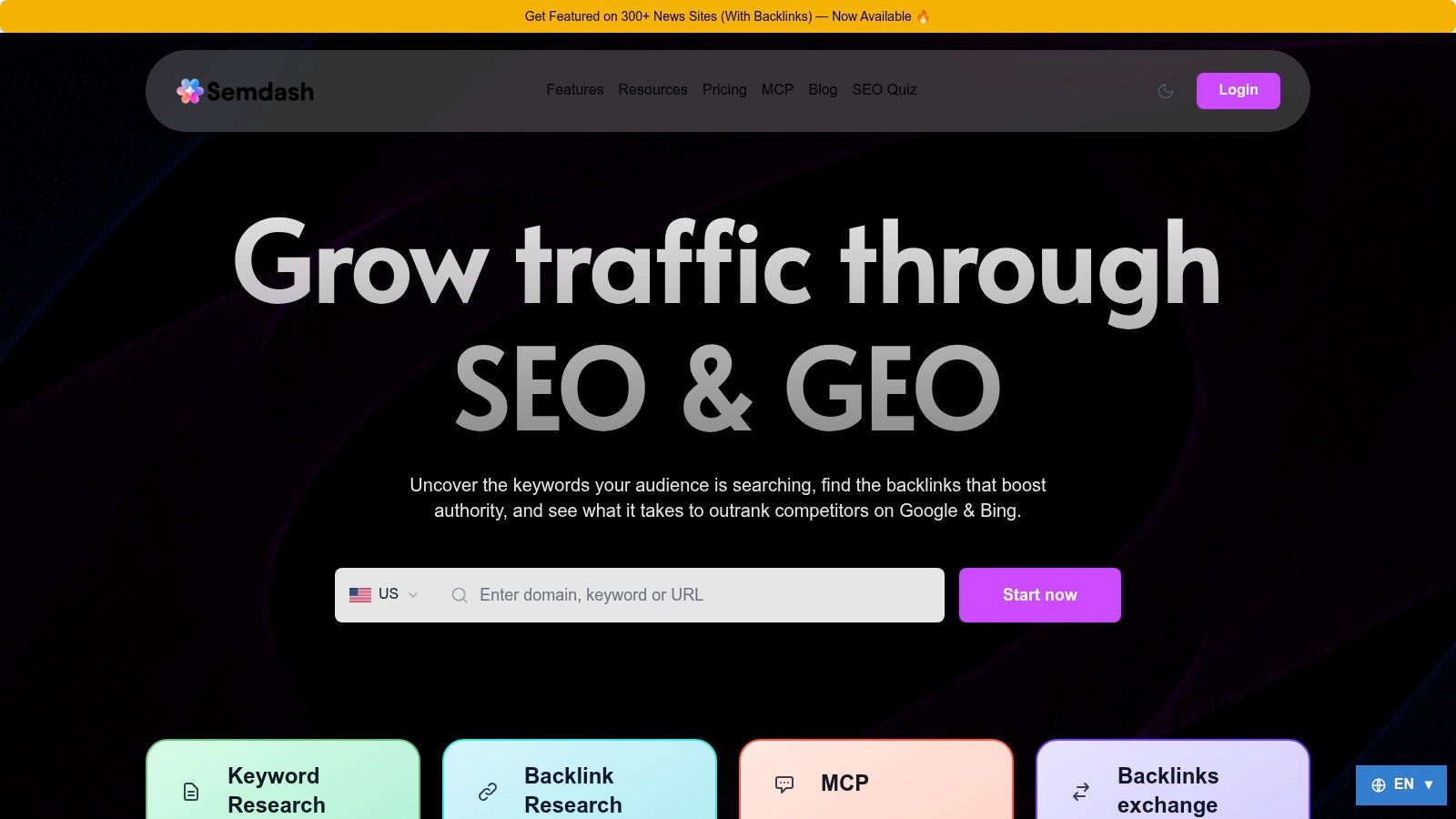
SemDash belongs in your research stack, not on your outreach list. I'd treat SemDash (SemDash) as pre-pitch infrastructure: it provides keyword, competitor, backlink, and SERP research across Google and Bing, with domain-level and page-level reports for investigating potential publishers.
Start with Backlink Gap. Compare your domain against competitors that already publish contributed pieces, list the referring domains you haven't reached, then inspect the actual linking pages. A competitor's directory listing isn't evidence that an editor accepts contributed articles, so check the page type before adding anything to your shortlist.
Once a target survives that check, use Top Pages, Keyword Gap, and search-intent analysis to build an angle the publication hasn't exhausted. Keyword clustering, People Also Ask suggestions, and AI-assisted briefs can shape the proposal, but read the outlet's recent posts before drafting. Pitches built only on gap data tend to repeat what's already there.
Where the tool helps and where it doesn't
- Research depth: Combine referring domains, anchors, traffic estimates, and URL-level rankings instead of qualifying publishers from a domain score alone.
- Angle validation: Check competing pages and 12-month SERP history before proposing a tutorial, comparison, or expert explanation.
- Reclaiming links: Unlinked brand mentions and broken backlinks are a separate workflow from contributor outreach, and often an easier first ask.
- Commercial distinction: SemDash's Get Featured service offers guaranteed placement on NBC, FOX, and CBS affiliates plus 300+ major news outlets. Paid distribution serves a different goal than earned editorial coverage.
The wider toolkit covers AI Overviews citation tracking, a community where SEO professionals can get answers, free live calls with an SEO specialist, and free utilities including a keyword search volume checker and competitor finder. Customers describe the web app as fast and simple to use.
The trade-off: Sharper research won't establish contributor eligibility or win an editor's approval. Run the gap analysis, confirm the program directly with the outlet, and use the free trial or a scheduled demo to test the workflow before building it into client deliverables.
2. Search Engine Journal (SEJ)
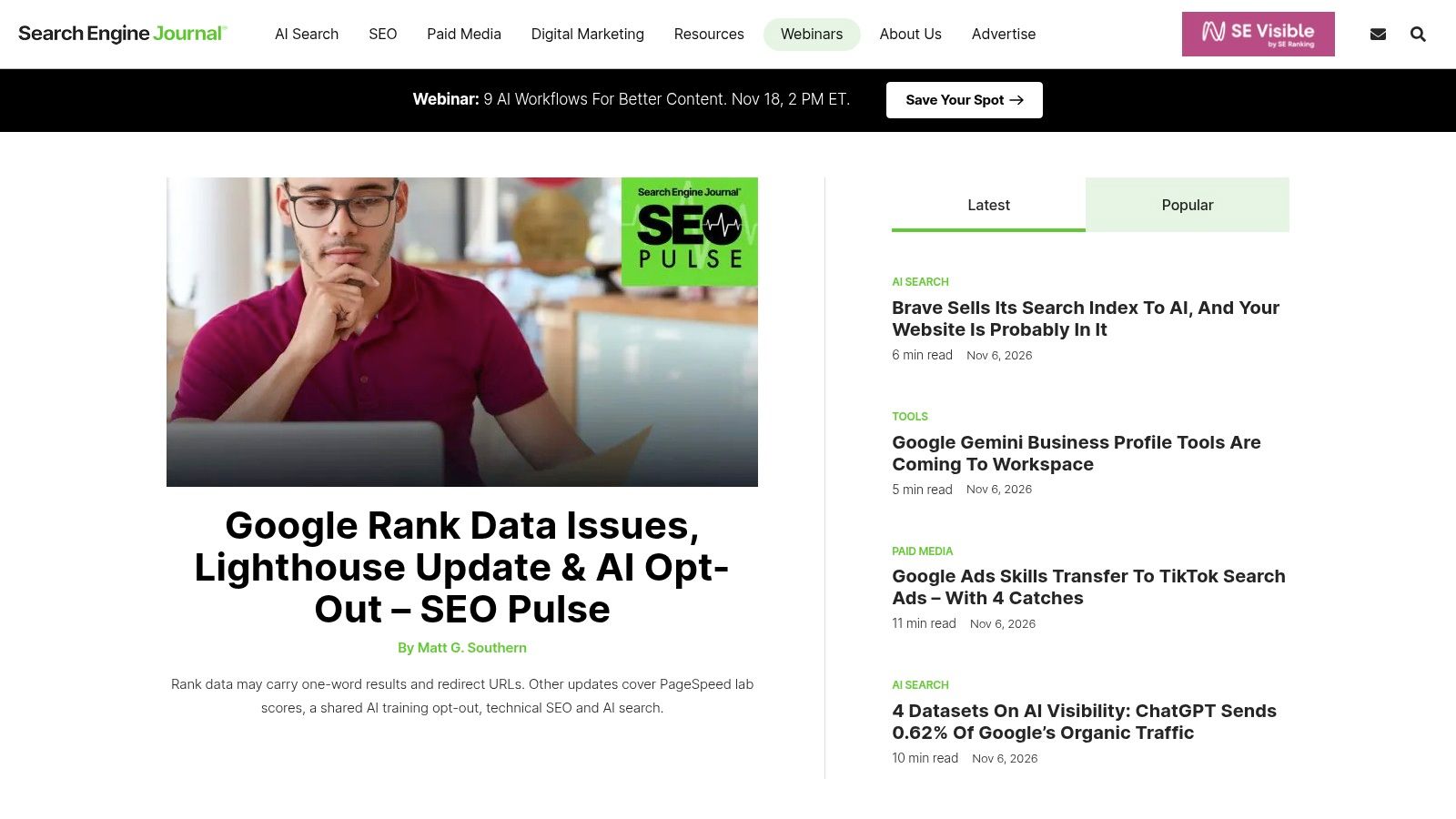
I'd reserve Search Engine Journal for your strongest original SEO or digital-marketing work. Think documented experiments, carefully bounded case studies, or a framework that helps readers make a difficult decision, not a familiar tutorial with a product mention inserted.
The application-based contributor route requires editorial approval. You should also consider whether you can sustain a recurring publishing relationship rather than treating acceptance as a standalone backlink transaction.
Pitch the evidence before the headline
A useful application should explain your subject expertise, the question you're equipped to answer, and the evidence you can contribute. For an AI-search article, I'd distinguish observed results from interpretation and explain exactly how another practitioner could repeat the investigation.
According to DeepSmith's account of SEJ's contributor policy, submissions require at least 1,000 words, and buying, trading, or selling links is prohibited. Recheck the current official requirements before submitting, particularly article length, exclusivity, and acceptable references.
Najlepsze dopasowanie: Exclusive, evidence-led articles across SEO, content, ecommerce, PPC, social, and AI search.
Skip it when: Your primary requirement is a promotional link, your evidence can't survive editorial scrutiny, or you can't support an ongoing contribution cadence. No contributor fee is listed, and I wouldn't promise a publication date before approval.
3. HubSpot Blog
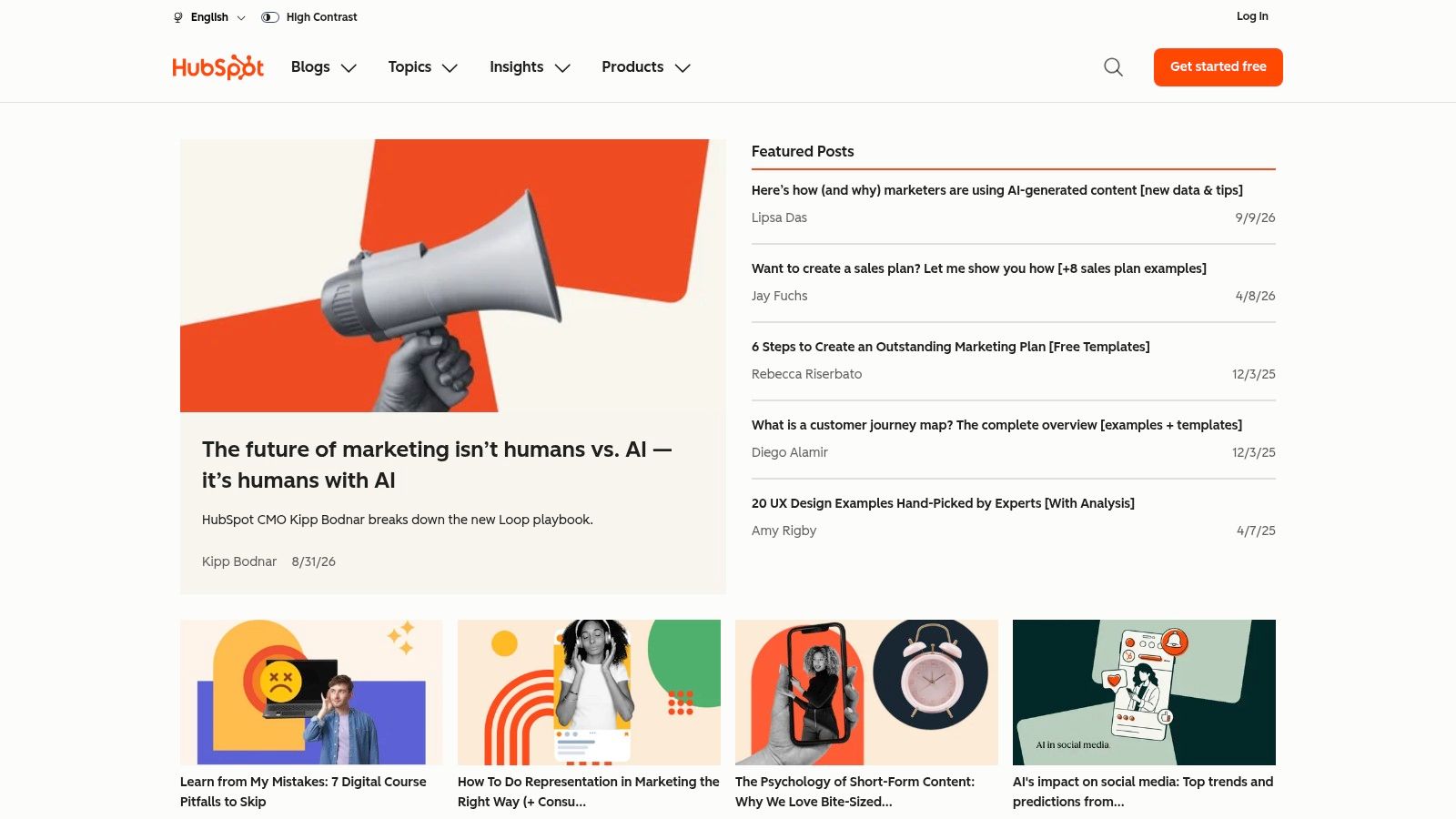
An SEO topic needs a marketing consequence to make my shortlist for the HubSpot Blog. Instead of proposing keyword research basics, I'd develop an article about deciding which search opportunities deserve investment when traffic and qualified demand point in different directions.
You can target Marketing, Sales, Service, or Website coverage, but don't send an undifferentiated proposal across sections. Choose the reader first, then explain the decision your contribution helps that reader make.
- Pitch format: Present a specific argument, the practical evidence behind it, and the section it belongs in.
- Editorial fit: Offer original perspectives, experiments, analysis, or lessons rather than a rewritten introductory guide.
- Rights consideration: Accepted articles are exclusive to the HubSpot Blog, so don't allocate the same finished piece to your own publishing calendar.
- Commercial limitation: Link-building schemes and excessive promotion aren't suitable objectives.
I'd settle exclusivity before commissioning a draft. Otherwise, you can end up paying for an article your team expected to reuse but can't republish.
The trade-off is reach versus control. You're seeking editorial consideration, not purchasing a guaranteed placement or retaining unrestricted reuse rights. No submission fee is listed, and publication isn't guaranteed.
If your idea only makes sense with your company named throughout, I'd rewrite the premise or choose a different channel. A useful article should remain coherent after an editor removes the promotional references.
4. HubSpot User Blog
Don't confuse the User Blog route with the broader editorial blog. For this HubSpot opportunity, I'd check customer or partner eligibility before developing a topic.
Your contribution needs to educate HubSpot users and connect meaningfully with the software or inbound-marketing practice. A general SEO article with a token software reference isn't the same as a tutorial a customer can implement.
Build around an actual user task
Say you're explaining how to handle leads from organic landing pages. A suitable outline would cover the inputs, the HubSpot workflow, the handoff, and the verification step, rather than spending most of the article discussing search visibility.
The published process includes topic approval, outline review, and editorial feedback. The HubSpot website describes a 500–1,500-word format and permits up to two links to the contributor's site content through the relevant contributor route.
Treat eligibility as a gate, not a detail to resolve after writing.
I'd obtain topic approval before investing in screenshots or a finished walkthrough. Software tutorials also need a final interface check before submission, because outdated labels can make otherwise useful instructions frustrating.
Najlepsze dopasowanie: A qualifying customer or partner with a useful workflow to teach.
Skip it when: You can't establish eligibility, can't incorporate the software naturally, or mainly want to promote an unrelated SEO product. No submission fee is stated; the staged review process shouldn't be mistaken for an immediate publishing commitment.
5. Scale by SEO
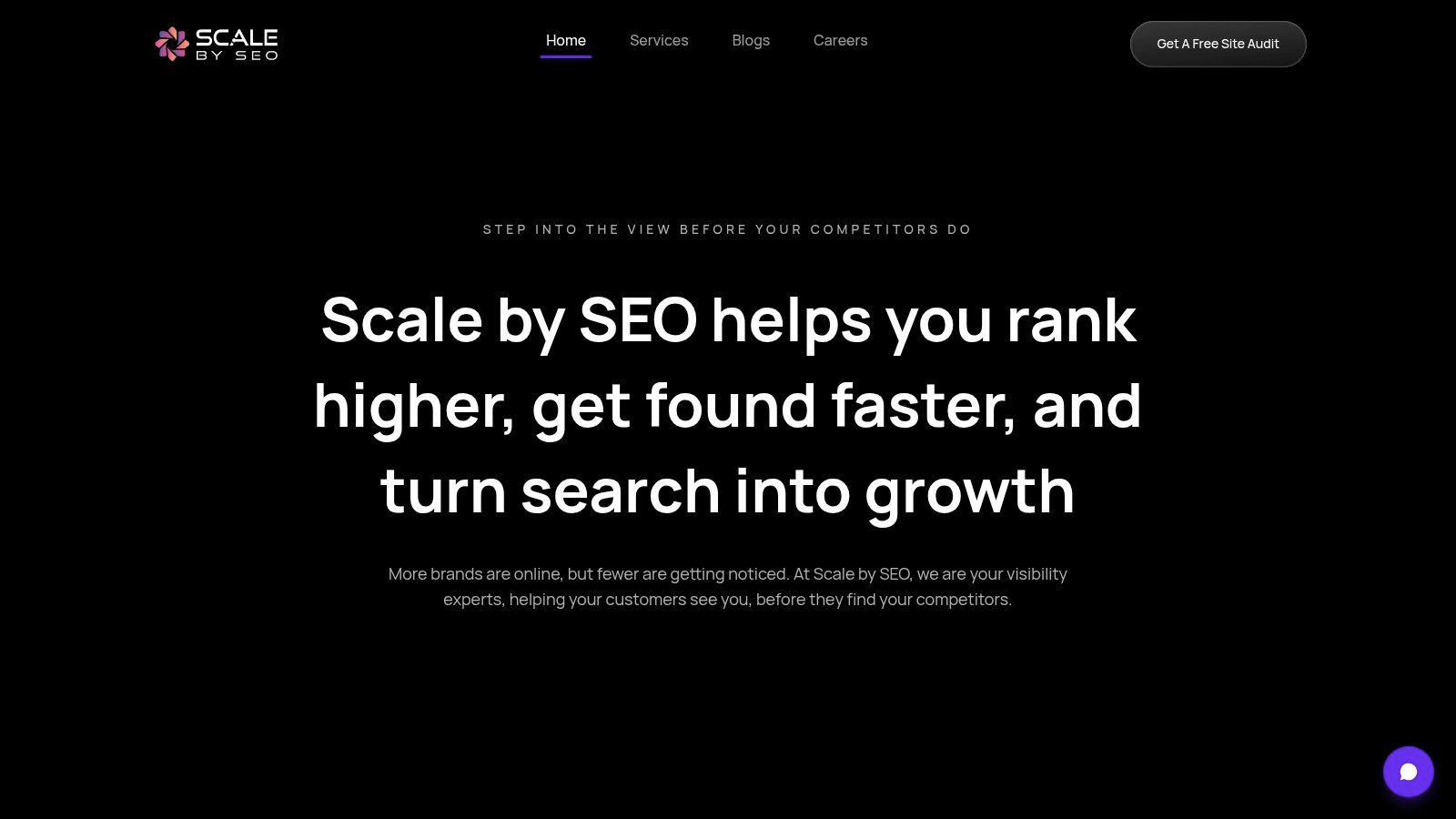
For a practical SEO contribution aimed at smaller businesses, I'd consider Scale by SEO. You can propose technical SEO, on-page improvements, link building, content strategy, or AEO/GEO, but the business takeaway needs to be explicit.
I'd choose the title-and-summary route rather than send a full draft immediately. That gives you room to resolve scope before writing, particularly when a technical topic could become either a beginner explanation or a specialist implementation guide.
- Strong angle: Explain how a local business can prioritize indexation problems when developer time is limited.
- Useful evidence: Include a reproducible inspection process, decision criteria, and clearly labeled examples.
- Weak angle: List familiar SEO recommendations without explaining which to implement first.
- Eligibility signal: Show relevant practitioner experience through your bio and proposed supporting material.
For an outsourcing article, I'd focus on publisher qualification, responsibilities, and reporting. The operational questions in this guide to outsourcing link building provide a more useful starting point than a generic argument for acquiring more links.
The trade-off: You get a closely aligned subject area, but you still need to translate specialist knowledge into decisions a business owner can use.
Editorial response times and publication timing aren't specified. No fee is stated, so confirm the current terms with the editor rather than assuming either paid placement or guaranteed free publication.
6. SEOSpot

I'd approach SEOSpot with a compact topic proposal and a clear angle. The subject range suits technical SEO, digital PR, AI search, SaaS SEO, and content strategy, but relevance alone isn't enough.
Your pitch should identify what readers will learn that they can't get from an ordinary overview. For a broken-link article, explain how you'd distinguish a useful replacement resource from an opportunistic redirect to a commercial page.
Make the example carry the argument
I'd include the proposed example in the pitch itself: the starting problem, the inspection method, and the decision the reader can make afterward. That helps an editor evaluate substance without having to request a complete draft.
Accepted contributions receive an author byline. Originality, concrete examples, proper attribution, and usefulness matter more than finding a sentence where a target URL can fit.
Timing: The SEOSpot contributor information says pitches usually receive a response within a few business days. Treat that as a response expectation, not an acceptance or publication deadline.
Limitations: No detailed article-length requirement or fee is stated, and the guidelines don't quantify audience reach. I'd clarify scope after an encouraging reply and assess readership separately.
Skip this route if removing your commercial link would remove your reason for writing. A link-first submission conflicts with the editorial positioning, even when the surrounding article is technically original.
7. GreatInflux
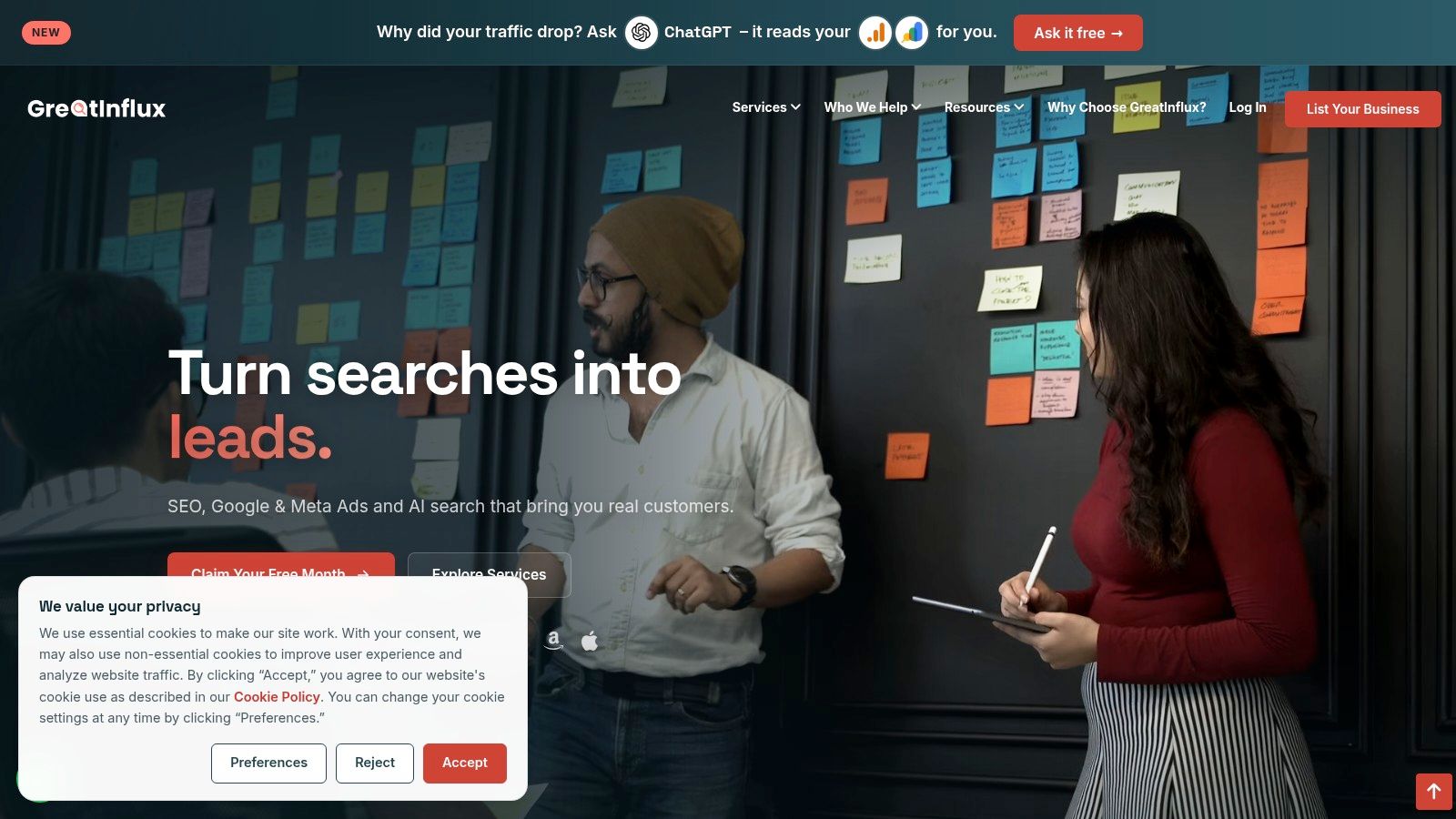
A cross-functional angle is my preference for GreatInflux. You can connect SEO with paid media, content, conversion-rate optimization, or growth instead of competing with another broad search-marketing introduction.
For example, I'd propose a practical comparison of organic landing-page intent and paid-search messaging. The useful contribution would be the method for diagnosing mismatches, not a claim that coordinating channels automatically improves results.
- Submission route: Send an idea or draft through the form.
- Pitch contents: Explain the reader problem, your proposed method, and the supporting examples.
- Contributor visibility: An author bio and author-site link are available.
- Possible amplification: Accepted work may appear on social channels and in the newsletter, but I wouldn't treat that as a guaranteed distribution commitment.
The benefit is flexibility. You can write for marketers, founders, or business owners as long as the article has a clear practical purpose.
The limitation is measurement. Audience size and promotional reach aren't quantified, and neither word count nor response commitments are specified. I'd assess recent articles for audience fit before investing heavily in production.
An author-site link also doesn't establish a particular link attribute or search benefit. If your campaign requires a followed contextual link, don't assume a bio-link allowance meets that requirement. No fee is listed.
8. O8 Agency
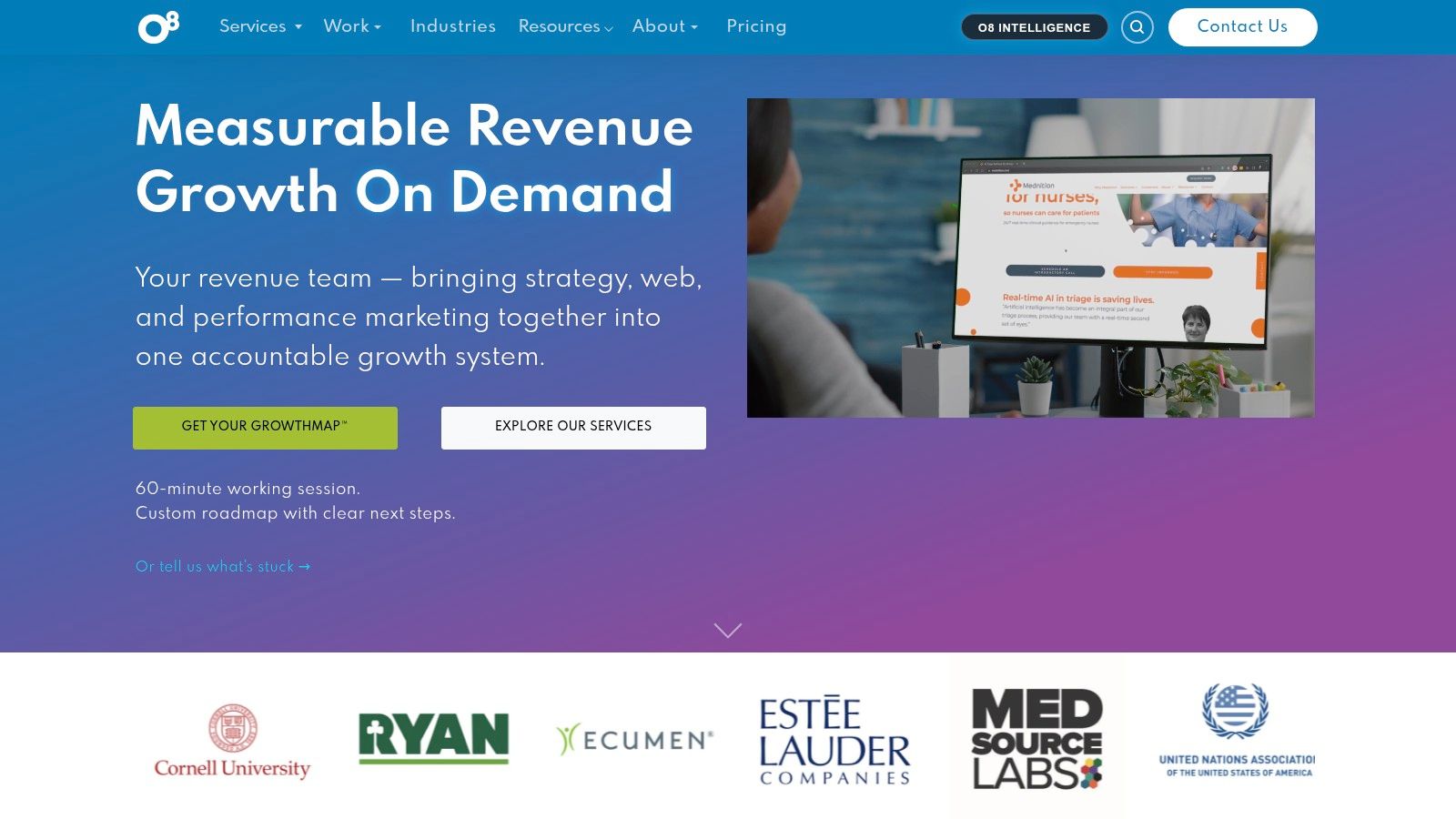
Dla O8 Agency, I'd lead with an operational B2B problem rather than an SEO trend. MarTech, marketing operations, AI, growth, performance marketing, and digital transformation give you room to address how marketing teams implement change.
A promising proposal might explain how to connect organic-search reporting with lead-quality review. I'd describe the fields, ownership, review process, and limitations instead of suggesting that a dashboard alone solves attribution.
Bring implementation detail
You should be able to explain what happens after the recommendation. Who reviews the output? What triggers a change? How can a reader tell whether the implementation is working?
That level of specificity suits the emphasis on data-backed, actionable contributions. A submission form provides the pitch route, but a confident opinion without supporting evidence isn't an equivalent substitute.
Evidence standard: Use real, permissioned material when available. Label a hypothetical workflow as hypothetical rather than dressing it up as a client result.
Najlepsze dopasowanie: SaaS marketers, agencies, and B2B practitioners with an implementation lesson that extends beyond basic keyword targeting.
Kompromis: The broader marketing remit lets you tackle organizational problems, but a narrowly technical SEO article may need a stronger business connection. No fee, word count, or publication timeline is specified.
I'd skip this outlet for a generic AI trends piece or a product-feature tour. Develop a defensible operational argument before submitting.
9. Web Zodiac
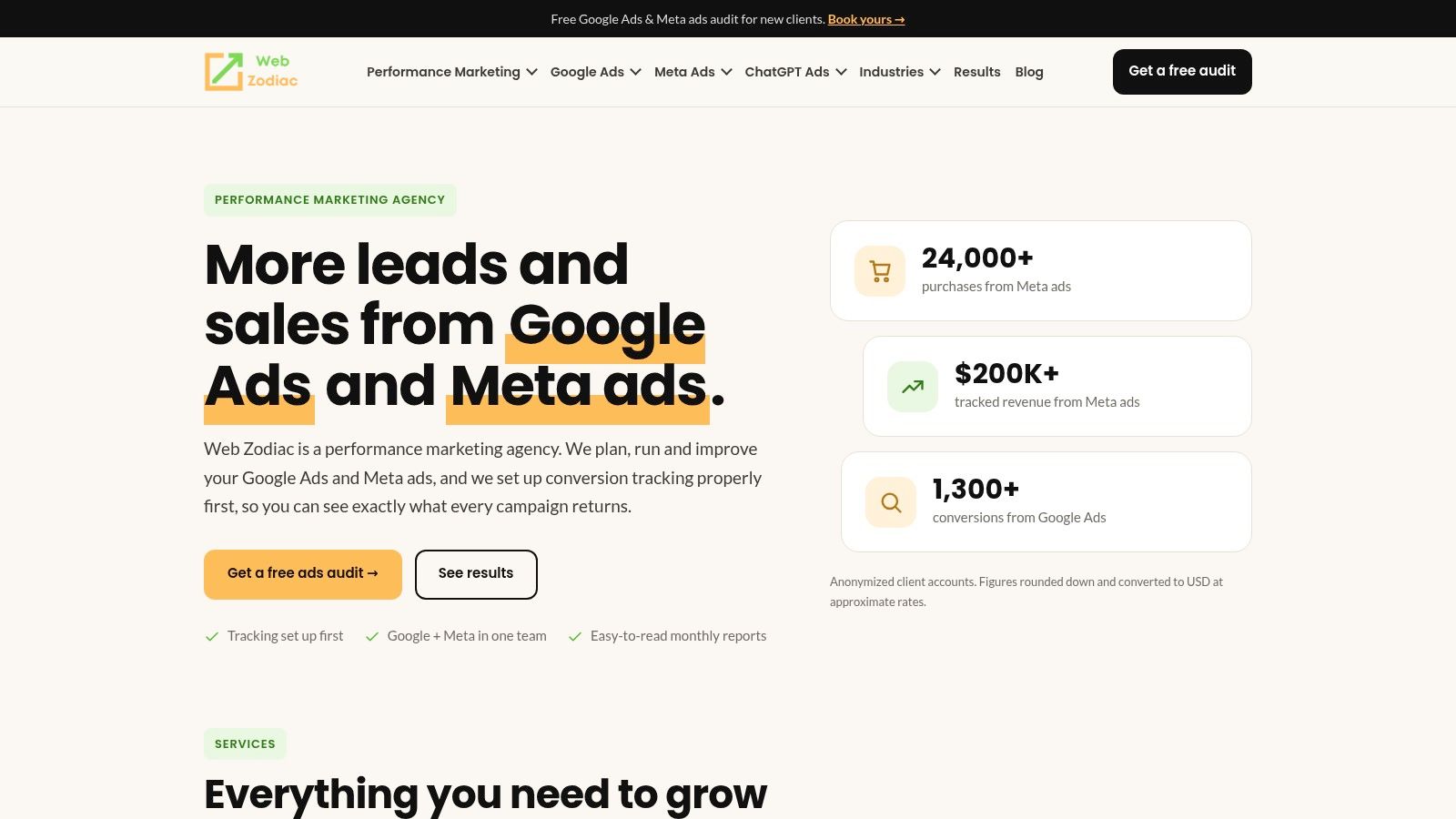
I'd shortlist Web Zodiac when an SEO article has a strong measurement component. Its stated audience includes marketers, SaaS founders, and analysts, with coverage spanning SEO, PPC, content, and analytics.
The email pitch should include a proposed headline, short summary, and brief author bio. I'd make the summary specific enough to reveal the article's reasoning, not merely announce a subject.
- Proposed headline: Explain how to evaluate organic landing pages when traffic and qualified enquiries disagree.
- Summary: Describe the segmentation method, the evidence needed, and the decisions readers can make.
- Bio: Establish relevant subject expertise without turning the email into a company brochure.
- Link expectation: Plan around an author-bio link rather than an in-body commercial placement.
The Web Zodiac contributor guidance allows one author-bio link and says the site aims to respond within seven working days. I'd record that response window separately from any eventual draft or publication deadline.
The practical advantage is a defined submission format. You know what to prepare before making contact.
The limitation is that audience size and reach aren't quantified. You also need useful experience or supporting evidence, not a product description.
Skip it if your campaign only counts contextual product links as successful placements. A suitable editorial contribution and a suitable link-acquisition target aren't always the same opportunity.
10. TechRadar Pro Perspectives
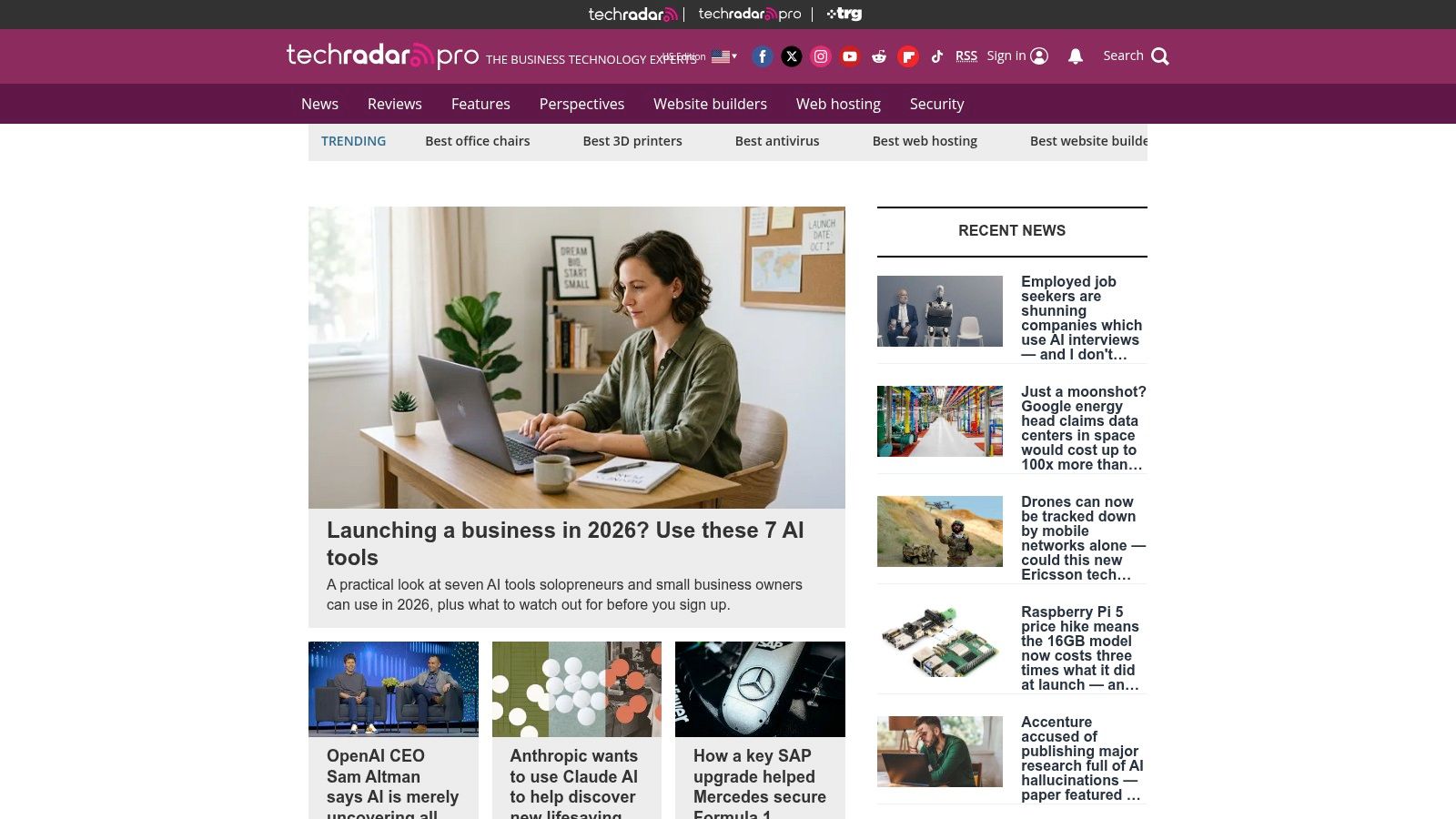
I'd keep TechRadar Pro in a watchlist, rather than treating it as an available placement. Perspectives is a contributed-content route for technology-industry analysis and opinion, so it suits a strong market argument more than a routine SEO tutorial.
Submission availability can change. Check the program page for its current status before contacting an editor, especially when a campaign deadline depends on publication. If submissions are closed or a backlog is noted, set a status-check reminder and move on.
Prepare an argument, not a guest-post package
If submissions reopen, pitch one specific technology argument around AI search, information discovery, or the business implications of digital marketing. Explain what is changing, which audience needs to act, and what evidence supports the conclusion. A tight premise gives the editor a clear reason to assess it.
Good fit: A focused, non-promotional perspective grounded in relevant industry expertise.
Poor fit: Routine keyword advice, a generic trend roundup, or an article designed around product placement.
Approval and publication are separate milestones. An accepted piece can still wait behind other contributions, so don't reserve a campaign launch date around an unconfirmed editorial slot.
Keep watchlist targets separate from your active link-building outreach queue. Record the status check, reopening condition, and next review reminder, then spend pitching time on programs currently accepting work. No submission price is stated.
Guest post opportunities at a glance
| Najlepsze dla | Topic scope | Pitch format | Editorial selectivity |
|---|---|---|---|
| SemDash, SEO research and competitor analysis | Keywords, backlinks, SERPs, content planning, and AI search | Not applicable; SEO research platform | Not applicable; product, not publication |
| SEO professionals pitching expert contributions | SEO, digital marketing, content, ecommerce, PPC, and AI search | Application; original article of at least 1,000 words | Selective; editorial approval and recurring cadence expected |
| Experts pitching original marketing insights | Marketing, sales, service, and websites | Expert submission; accepted work must be exclusive | Competitive; reviewed for fit and current needs |
| Eligible HubSpot customers or partners sharing practical tutorials | HubSpot software and inbound marketing | 500–1,500 words; topic and outline review | Limited eligibility; editorial feedback and approval |
| Practitioners sharing actionable SEO lessons | Technical and on-page SEO, link building, content strategy, and AEO/GEO | Proposed title and summary or full draft | Experience-focused; practical audience takeaways expected |
| Contributors pitching useful SEO and marketing articles | SEO, link building, AI search, and digital marketing | Topic and short angle pitch | Original, evidence-based work required; promotional pitches rejected |
| Marketers sharing practical growth advice | SEO, paid media, content, CRO, and growth marketing | Idea or draft via submission form | Seeks original, practical work; sales pitches discouraged |
| B2B marketers with data-backed implementation advice | B2B marketing, growth, MarTech, AI, and marketing operations | Topic pitch via form | Evidence-led; generic advice is unlikely to fit |
| Marketers sharing hands-on analysis | SEO, PPC, content, and analytics | Email headline, summary, and author bio; pitch or draft | Favors useful experience and real-world evidence |
| Experts with a distinctive technology-industry perspective | Technology, AI, search, and digital marketing's business impact | Analysis or opinion submission; currently closed | Selective editorial format; not accepting new submissions as of November 1, 2026 |
How to Work This List Into Your Outreach Plan
My recommendation is to qualify each target before writing the pitch. Check audience fit, current contributor activity, eligibility, exclusivity, submission format, and acceptable commercial references. A relevant publication can still be the wrong opportunity if you can't meet its requirements.
Start with pitch-first, SEO-native outlets when your idea is a practical tutorial or implementation lesson. Reserve selective editorial programs for original work that can support a stronger application. Keep closed or uncertain programs on a watchlist rather than counting them toward promised delivery.
Separate interest from publication
In an analysis of 12 million outreach emails, 8.5% received a reply, according to the outreach analysis summarized by Smarty Marketing. That's a reply benchmark, not a guest-post acceptance rate, and it shouldn't become a placement forecast.
Track the stages separately:
- Qualified prospect: You've checked audience, eligibility, and recent editorial activity.
- Pitch sent: You've followed the required submission format.
- Positive reply: An editor has expressed relevant interest.
- Approved topic: You've agreed on scope and requirements.
- Published contribution: You've inspected the live article, attribution, and links.
Before sending, test email deliverability so you aren't trying to solve an inbox-placement problem by rewriting a perfectly serviceable pitch. Use accurate sender information and keep a shared record of refusals, requests to stop, and editorial preferences.
I'd personalize around a missing explanation, outdated example, or useful companion article. Mentioning an editor's name isn't the same as showing why the proposed contribution belongs in the publication.
Protect the value beyond the backlink
Google's spam policies identify paid links that pass ranking credit and optimized-anchor links in guest posts as link spam; paid links can use appropriate qualification such as nofollow lub sponsored. Don't negotiate an article around circumventing those rules.
Instead, evaluate referral relevance, author visibility, editorial credibility, and whether readers have a useful next step. Choose a destination that delivers on the surrounding sentence, not whichever commercial page your campaign happens to prioritize.
Finally, record exclusivity and reuse rights before commissioning the draft. Give the editor evidence, accessible supporting resources, and a contribution that remains valuable if promotional references disappear. That's a more defensible outreach plan than treating every website on a guest-post list as interchangeable inventory.
We offer competitor backlink research, Backlink Gap analysis, and page-level SEO insights to help you discover and qualify guest post opportunities. Visit SemDash (SemDash) to start a free trial, compare relevant competitors, and turn promising referring domains into a shortlist worth pitching.