%20(1)-B86R08ZzwhPzS6UZbG3mSxRWPCwGwn.png)

Fragmenty wyróżnione a przeglądy AI: Co faktycznie wygrywa kliknięcia

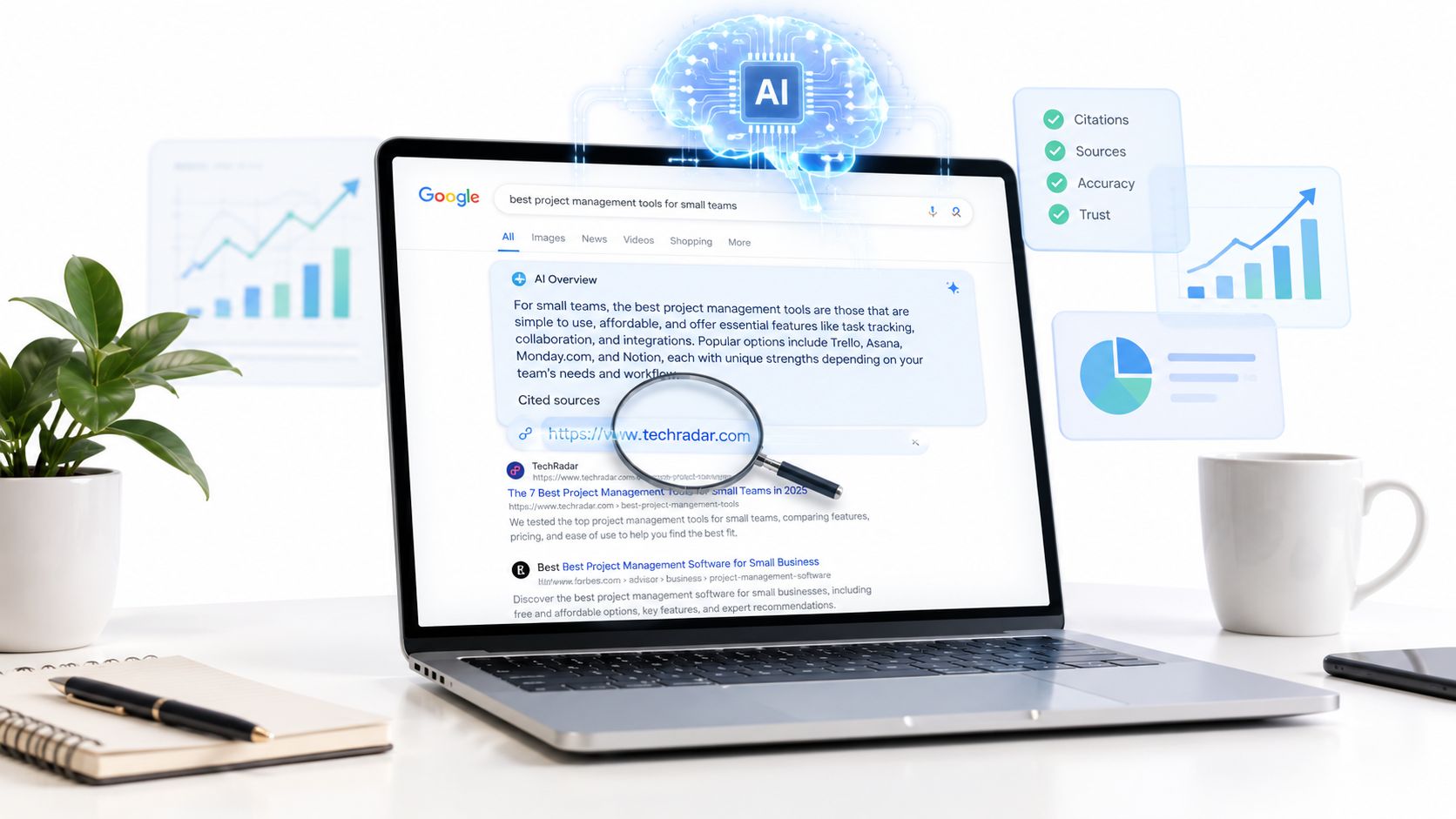
Featured snippets extract one passage from a single page; AI Overviews synthesize an answer across multiple sources using Gemini. That’s the core mechanical difference, and it changes everything about how you optimize.
The SEO implication is straightforward: you now need two overlapping but distinct strategies, as described in this definitive guide to generative engine optimization. Keep building short, labeled answer blocks that win the snippet, because that format still gets pulled directly into position zero. Also, build topical authority across clusters of pages, because AI Overviews reward sites that show up as one of several trusted sources, not the single best-matching page.
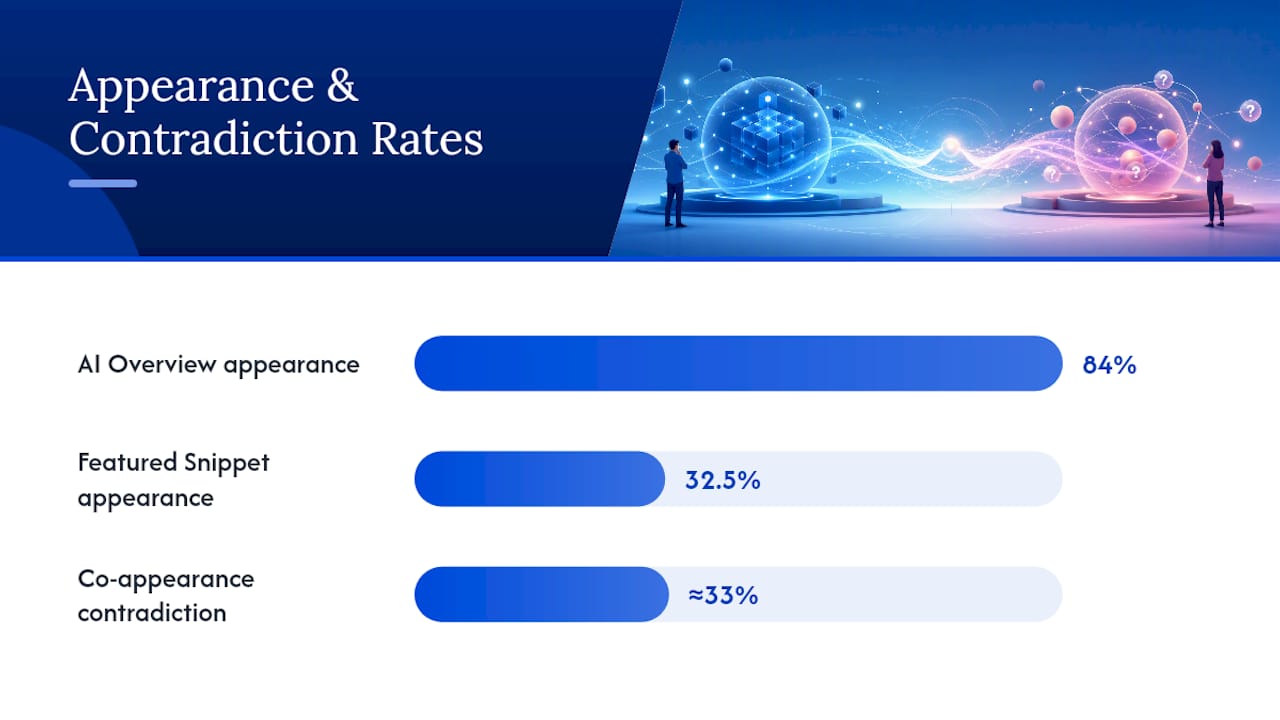
The numbers back up the urgency here. In one tracked dataset, AI Overviews appeared in roughly 84% of sampled queries in a given vertical, compared to about 32.5% for featured snippets, according to an arXiv study on AI Overviews and featured snippet behavior. Pew Research also found that users click fewer links when an AI summary appears in the results.
What does this mean for your next move?
- Track AI Overview mentions for your target keywords, not just snippet wins.
- Write answer blocks in the 40 to 60-word range for snippet eligibility.
- Build 200 to 400-word semantically rich sections that AI systems can pull for synthesis.
- Monitor both features side by side in Semdash’s AI Overview checker to see which one your pages actually win.
Kluczowe wnioski
Featured snippets extract a single-source answer while AI Overviews synthesize multiple cited sources, and building topical authority across page clusters now matters more than winning position zero alone.
| Punkt | Szczegóły |
|---|---|
| Know the mechanical split | Snippets extract one page’s text; AI Overviews synthesize and cite several sources through Gemini. |
| Appearance rates favor AI Overviews | Sampled data shows AI Overviews near 84% appearance versus about 32.5% for snippets in the same vertical. |
| Watch for contradictions | Roughly a third of co-appearance cases show inconsistency between a page’s snippet and its AI Overview citation. |
| Structure content in two layers | Pair a 40 to 60-word snippet-ready answer with a 200 to 400-word section built for AI synthesis. |
| Monitor citations continuously | Semdash’s AI Overview checker and SERP history track which keywords trigger citations and whether they hold over time. |
Featured Snippet vs AI Overview: How the Mechanics Differ
Google built these two features to solve different problems, and the mechanics reflect that. A featured snippet is a lift-and-place operation: Google’s algorithm identifies the single best-matching passage on a single page and displays it verbatim, with one link back to the source. An AI Overview works more like a research assistant. It pulls fragments from multiple pages, runs them through Gemini, and generates a new, synthesized paragraph that cites several sources at once.
Google calls the underlying retrieval process “query fan-out.” Rather than matching a query to one ranking page, the AI system decomposes the query into related sub-questions and searches across a wider set of supporting pages, then blends findings into a single response. This is why an AI Overview about “best running shoes for flat feet” might cite a podiatry site, a shoe review blog, and a running forum in the same box, while a featured snippet for “what is pronation” pulls one clean definition from one page.
Citation behavior is where the practical stakes show up. A featured snippet sends nearly all the click potential to one URL. An AI Overview splits attention across every cited source, which means you might get cited without getting the click, or get a click share you’d never see from a snippet. As one industry comparison puts it, AI Overviews distribute clicks across several cited links while snippets concentrate them on a single source.
Length and format diverge too. Featured snippets stay compact, typically 40 to 60 words, because Google is extracting a definitional answer, a numbered step, or a short list. AI Overviews run longer, often in the 150 to 300-word range, because they’re stitching together context from multiple angles: a definition, a caveat, a comparison point. AI Overviews also carry more interactivity. Users can expand sections, click through to “AI Mode” for a conversational follow-up, or ask a clarifying question, none of which a static snippet supports.
Here’s the practical translation for content structure:
- Snippets reward one crisp, self-contained answer near the top of the page, clearly labeled with an H2 or H3.
- AI Overviews reward comprehensive coverage: a cluster of related pages, each answering a piece of the broader question, cross-linked so Google’s fan-out process can find and stitch them together.
- Neither format punishes the other. A page can be structured to win a snippet AND get cited in an Overview, provided the content is genuinely thorough beyond the short answer block.
Wskazówka Pro: Write your snippet-targeted answer in the first 60 words after the heading, then use the following two or three paragraphs to add the depth and cross-references that make the page citation-worthy for AI Overviews too. You’re not choosing one format over the other; you’re layering them.
What Do The Data Say About Appearance Rates and Clicks?
The gap between these two features isn’t subtle, and the data should reshape how you prioritize.
Appearance frequency tells the first part of the story. The arXiv study on AI Overviews and featured snippet behavior found AI Overviews appeared in roughly 84% of the sampled queries in its tracked vertical, while featured snippets showed up in about 32.5% of the same set. That’s a wide margin, and it means for a large share of informational queries, the AI Overview is now the primary real estate you’re competing for, not the snippet.
Click behavior is the second, more consequential piece. Pew Research’s field data found that people click on search results less often when an AI-generated summary is present, a pattern consistent with broader zero-click trends across search. That doesn’t mean traffic disappears entirely. It means the typ of traffic changes: fewer raw clicks, but the clicks that do happen often come from users who scanned a synthesized answer, decided they needed more depth, and picked a source they already trusted from the citation list.
Contradiction rates are the number most SEOs haven’t looked at closely enough. In queries where both a featured snippet and an AI Overview appeared, the same arXiv research found inconsistency between the two answers in roughly a third of co-appearance cases. When Google’s own snippet and its own AI synthesis disagree on the same SERP, that’s a signal your content isn’t yet unambiguous enough to anchor either feature reliably.
| Metryka | Featured Snippet | Przegląd AI |
|---|---|---|
| Sampled appearance rate | appears in a smaller portion of queries | appears in a much larger portion of queries |
| Source model | Single page, verbatim extraction | Multiple pages, synthesized |
| Typical length | 40 to 60 words | 150 to 300 words |
| Click distribution | Concentrated on one URL | Split across cited sources |
| Co-appearance contradiction rate | Shared with AI Overview | occurs in roughly a third of overlapping cases |
These figures come from a single sampled vertical, so treat them as a directional benchmark, not a universal law. Sample sizes, query types, and industry mix all shift the exact percentages. A finance query set will not mirror a recipe query set. If you’re running your own tracking, segment by query type and revisit the numbers quarterly rather than assuming one snapshot holds across your entire keyword portfolio.
Engagement and conversion signals add nuance the appearance-rate numbers miss. Some industry analysis suggests featured snippets can drive strong CTR to a single winning page when they appear, while AI Overviews can produce more qualified engagement because the user has already absorbed context before clicking through, arriving closer to a decision. That’s a meaningful distinction for anyone measuring success by conversion rate rather than raw traffic volume.
The methodology caveat matters as much as the numbers themselves. Appearance and contradiction rates vary by vertical, sample window, and how “co-appearance” gets defined. Before you act on any published benchmark, including the ones above, pull your own SERP tracking data for your specific keyword set. A zero-click SEO tracking approach that logs impressions, AI Overview mentions, and CTR side by side will tell you more about your actual traffic pattern than any industry-wide average.
How Should You Structure Content to Win Both Features?
Winning both features starts with recognizing they respond to different, complementary signals. Here’s the sequence to work through over the next few weeks.
- Write the snippet-ready answer first. Put a direct, 40 to 60-word answer immediately under an H2 or H3 that mirrors the query’s phrasing. Use a numbered list or table where the query implies steps or comparison, since structured markup increases snippet eligibility.
- Build the AI Overview layer underneath. Follow the short answer with a 200 to 400-word section that adds context, edge cases, and specifics the short answer can’t hold. This is the material Google’s fan-out process pulls from when synthesizing a broader response.
- Cluster related pages and link them tightly. AI Overviews favor sites that demonstrate range across a topic. If you have five pages that each answer a slice of a bigger question, cross-link them so the topical relationship is unmistakable to both users and crawlers.
- Run the technical checklist. Confirm pages are indexable, free of blocking robots directives, and not carrying a
nosnippettag if you want snippet eligibility. Google has confirmed that AI Overviews require the same standard indexability and snippet eligibility as classic search features, no bespoke technical gate required. - Set your measurement plan before you publish. Track AI Overview mentions, citation placement, and CTR shift weekly for the first month, then move to a biweekly cadence. Watch Search Console impressions alongside Semdash’s citation tracking so you can separate “we got cited” from “we got clicked.”
- Run a matched experiment. Pick two similar pages targeting comparable queries. Add the structured snippet block and expanded answer section to one; leave the other as a control. Measure AI Overview mentions and CTR differences over six to eight weeks.
Wskazówka Pro: Don’t skip the control page in step six. Without it, you can’t tell whether a citation increase came from your structural changes or from a broader algorithm update that week. Matched experiments are the only way to isolate cause and effect on AI-driven visibility.
Which Feature Should You Prioritize for a Given Query?
Not every query deserves the same investment, and matching tactics to query type saves you from spreading effort thin.
- Simple, factual, single-answer queries (“what is a canonical tag”) still favor featured snippet tactics: one clean, quotable definition wins more often than a sprawling explanation.
- Multi-part, comparative, or “best” queries (“best CRM for small teams”) tend to trigger AI Overviews, since the answer requires weighing several options and citing multiple sources.
- If your KPI is direct click volume, snippets remain the stronger lever, since the click concentrates on your URL alone.
- If your KPI is brand visibility or qualified engagement, an AI Overview citation can matter more, even with a smaller click share, because you’re appearing alongside a shortlist of trusted sources.
- Health, finance, and other high-stakes verticals currently lean heavily toward AI Overviews, reflecting Google’s emphasis on synthesizing multiple expert sources for sensitive topics.
- Reference and how-to content (definitions, conversions, quick steps) still holds solid snippet value across most verticals.
Run a quick SERP check before committing resources: search the target query, note which feature appears, and check whether one, both, or neither shows up. That five-minute audit tells you more about priority than any generic rule of thumb.
How Do You Monitor Citation-Worthiness Over Time?
Winning either feature once means little if you can’t track whether you’re still winning it next month. Google’s algorithm updates constantly, and AI Overview citations shift with it.
Semdash’s AI Overview keyword tracking shows which of your target keywords currently trigger an AI Overview, and whether your domain appears among the cited sources. Pairing that with SERP history lets you see whether a citation is stable or fluctuating week to week, and content-gap analysis flags where competitors are winning citations you aren’t.

Beyond the tooling, published author bios, primary-source citations, and transparent methodology sections all raise your odds of being seen as citation-worthy, since AI Overviews reward topical breadth and demonstrated expertise over single-page optimization tricks.
Set alerts for three things: new AI Overview mentions, drops in citation count, and CTR shifts on pages that gain or lose a citation. That’s usually a sign your content needs a clearer, single, authoritative version of the fact in question. Review monthly at minimum.
The Gap Between Optimization Advice and What the Data Shows
Most advice on this topic treats featured snippets and AI Overviews as a single optimization problem with one checklist. The data doesn’t support that framing.
The overlooked nuance is the contradiction rate. A third of co-appearance cases showing inconsistency between Google’s own snippet and its own AI synthesis suggests plenty of content isn’t unambiguous enough to anchor either feature confidently. Chasing snippet formatting alone, without fixing the underlying clarity problem, is optimizing for a shrinking opportunity.
If you take one thing from this, prioritize citation-worthiness over snippet-chasing. Build the topical range and internal linking that makes your domain a repeat citation across an AI Overview’s fan-out process. The snippet-ready answer block still matters, but treat it as a subset of a bigger authority play, not the whole strategy.
Track Your AI Overview Citations Without Guessing
Guessing which pages earn AI Overview citations wastes the exact time you need for testing structural changes. Semdash gives you a direct answer instead: its AI Overview checker shows which of your target keywords trigger an AI Overview and whether your domain is among the cited sources, while SERP history tracks whether that citation holds steady or slips after an algorithm update.
Run the matched-page experiment from earlier this way: pull your target keyword list into Semdash’s narzędzie do badania słów kluczowych to confirm search volume and intent, edit one page with a structured snippet block and expanded answer section, leave a comparable page untouched as a control, then compare AI Overview mentions and CTR between the two over six to eight weeks. Use the SEO competition analysis tool to see which pages your competitors are already getting cited on for the same terms.
Start a Semdash trial and run your first paired experiment this week.
Źródła
- AI Overviews vs. featured snippets: A data driven comparison
- AI Features and Your Website | Google Search Central
- arXiv study on AI Overviews and featured snippet behavior
- Google users are less likely to click on links when an AI summary appears in the results
- Featured snippets: How to win position zero for SEO success
FAQ
Is Google’s Featured Snippet Powered by AI?
Not in the same sense as an AI Overview. A featured snippet uses Google’s ranking algorithm to extract an existing passage from a single indexed page, while an AI Overview generates new text with Gemini synthesizing multiple sources.
Is AI Mode More Accurate Than an AI Overview?
Neither feature has a published accuracy benchmark that supports a direct comparison, and both draw from the same underlying fan-out retrieval process. What the available data shows is that AI Overviews and featured snippets disagree in roughly a third of cases where both appear, which points to inconsistency risk in either format rather than one being definitively more accurate.
What Are Featured Snippets in Google Search?
A featured snippet is a highlighted answer box that appears above standard organic results, pulling a short passage, list, or table directly from one ranking page along with a link to that source.
Can You Give an Example of a Featured Snippet?
A search for “how many ounces in a cup” typically returns a featured snippet with a one-sentence conversion answer pulled from a single reference or cooking site, with that site’s link attached below the answer.
How Do I Track Which of My Pages Get Cited in AI Overviews?
Tools like Semdash’s AI Overview checker monitor your target keywords and flag when your domain appears among the cited sources, letting you compare citation stability against CTR and impression changes over time.